


- Afhalen na 1 uur in een winkel met voorraad
- Gratis thuislevering in België vanaf € 30
- Ruim aanbod met 7 miljoen producten
- Afhalen na 1 uur in een winkel met voorraad
- Gratis thuislevering in België vanaf € 30
- Ruim aanbod met 7 miljoen producten





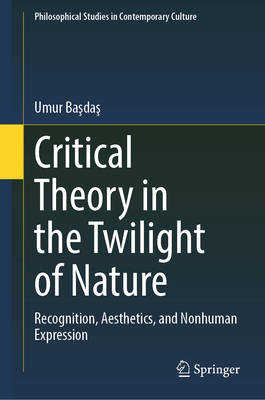
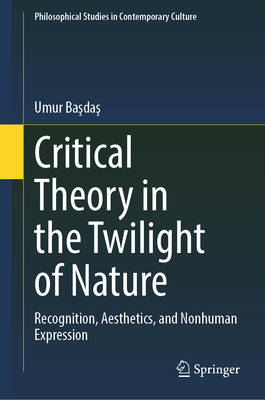
Critical Theory in the Twilight of Nature
Recognition, Aesthetics, and Nonhuman Expression
Umur Başdaş
€ 129,95
+ 259 punten
Omschrijving
This book offers a new discourse-theoretical framework for understanding the aesthetic and ethical dimensions of our relationship to nature by drawing on the tradition of Critical Theory. It traces an overlooked thread in the works of Kant, Fichte, Hegel, and Adorno one that shows how nonhuman beings can make normative claims on us not through language, but through visible, audible, and tactile forms of expression. By recovering this thread, this text proposes an alternative approach to recognition and agency that does not exclusively rely on linguistic mediation. In doing so, it links aesthetics and ethics in an original way, offering an important contribution to environmental political theory. The book also offers a critical response to the limitations of current communicative models particularly those shaped by the legacy of Habermas and argues for a broader conception of communication that includes nonhuman forms of expression. Rather than treating nature as a system to be described or a resource to be managed, it explores how natural beings appear to us as expressive presences capable of evoking care, respect, and responsibility. It is intended for scholars and graduate students in political theory, philosophy, Critical Theory, and environmental humanities. Individual chapters are suitable for advanced seminars on the philosophical foundations of ecological thought and discourse ethics.
Specificaties
Betrokkenen
- Auteur(s):
- Uitgeverij:
Inhoud
- Aantal bladzijden:
- 154
- Taal:
- Engels
- Reeks:
- Reeksnummer:
- nr. 22
Eigenschappen
- Productcode (EAN):
- 9783032161932
- Verschijningsdatum:
- 2/05/2026
- Uitvoering:
- Hardcover
- Formaat:
- Genaaid
- Afmetingen:
- 155 mm x 235 mm
- Gewicht:
- 362 g


Alleen bij Standaard Boekhandel
+ 259 punten op je klantenkaart van Standaard Boekhandel
Cadeau

AANGERADEN


Beoordelingen
We publiceren alleen reviews die voldoen aan de voorwaarden voor reviews. Bekijk onze voorwaarden voor reviews.