


- Afhalen na 1 uur in een winkel met voorraad
- Gratis thuislevering in België vanaf € 30
- Ruim aanbod met 7 miljoen producten
- Afhalen na 1 uur in een winkel met voorraad
- Gratis thuislevering in België vanaf € 30
- Ruim aanbod met 7 miljoen producten





Omschrijving
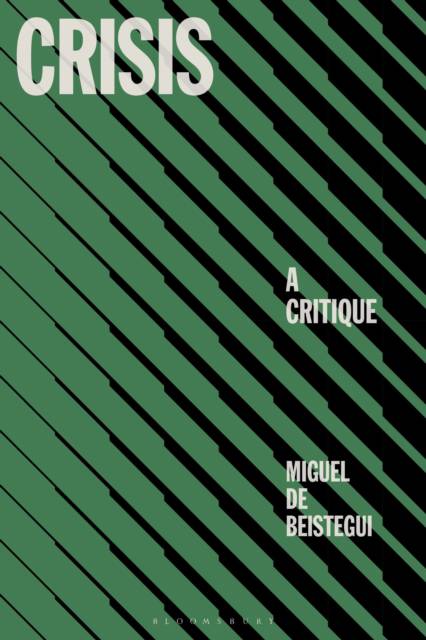
Crises abound.
The 'end of history' in the form of the triumph of liberalism has given way to a proliferation of crises internal to liberal, and especially neoliberal democracies: our economies and ecosystems, democracies, social and labour relations, constitutions, cultures, identities, and bodies are subjected to repeated and increasingly severe shocks. Unsurprisingly, the vocabulary of crisis is ubiquitous. Ours, we are told, is an age of chronic, multiple, and mutually reinforcing cataclysms. But what exactly do we mean when we speak of crisis? Deceptively simple, the term has become a repository for a mass of fears, hopes and assumptions, bound up with the very institutions and techniques of government it so often claims to address. Overused and emptied out, it leads to either indecision and paralysis, or, at the other extreme, its cynical instrumentalization. To counter this, we need a philosophy, specifically a critique, of crisis. Crisis: A Critique presents crisis as a construction through which we understand, experience and order the world; as a discursive event, producing a range of effects. Drawing on a range of examples (from economic crises to social uprisings, pandemics, genocides, and ecological devastation) and discourses (from ancient medicine to legal theory, political economy, philosophy, the earth sciences, and eco-criticism), this ambitious work of conceptual archaeology and typology engages with a range of authors who have questioned the nature of the connection between crisis and critique. If our time "out of joint" presents a crisis of critique itself, Miguel de Beistegui takes a vital step towards re-calibrating our language and thought for an age of seemingly unrelenting catastrophe.Specificaties
Betrokkenen
- Auteur(s):
- Uitgeverij:
Inhoud
- Aantal bladzijden:
- 344
- Taal:
- Engels
Eigenschappen
- Productcode (EAN):
- 9781350588820
- Verschijningsdatum:
- 19/02/2026
- Uitvoering:
- Hardcover
- Formaat:
- Genaaid
- Afmetingen:
- 156 mm x 234 mm
- Gewicht:
- 653 g


Alleen bij Standaard Boekhandel
+ 407 punten op je klantenkaart van Standaard Boekhandel
Cadeau

AANGERADEN


Beoordelingen
We publiceren alleen reviews die voldoen aan de voorwaarden voor reviews. Bekijk onze voorwaarden voor reviews.