


- Afhalen na 1 uur in een winkel met voorraad
- Gratis thuislevering in België vanaf € 30
- Ruim aanbod met 7 miljoen producten
- Afhalen na 1 uur in een winkel met voorraad
- Gratis thuislevering in België vanaf € 30
- Ruim aanbod met 7 miljoen producten





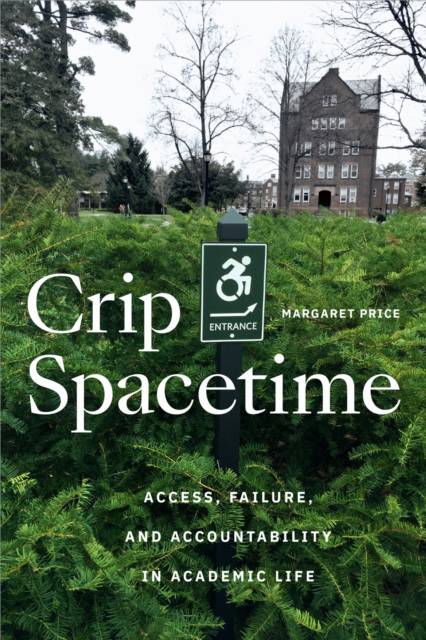
Crip Spacetime
Access, Failure, and Accountability in Academic Life
Margaret Price
Paperback | Engels
€ 37,45
+ 74 punten
Uitvoering
Omschrijving
In Crip Spacetime, Margaret Price intervenes in the competitive, productivity-focused realm of academia by sharing the everyday experiences of disabled academics. Drawing on more than three hundred interviews and survey responses, Price demonstrates that individual accommodations--the primary way universities address accessibility--actually impede access rather than enhance it. She argues that the pains and injustices encountered by academia's disabled workers result in their living and working in realities different from nondisabled colleagues: a unique experience of space, time, and being that Price theorizes as "crip spacetime." She explores how disability factors into the exclusionary practices found in universities, with multiply marginalized academics facing the greatest harms. Highlighting the knowledge that disabled academics already possess about how to achieve sustainable forms of access, Price boldly calls for the university to move away from individualized models of accommodation and toward a new system of collective accountability and care.
Specificaties
Betrokkenen
- Auteur(s):
- Uitgeverij:
Inhoud
- Aantal bladzijden:
- 240
- Taal:
- Engels
Eigenschappen
- Productcode (EAN):
- 9781478030379
- Verschijningsdatum:
- 19/04/2024
- Uitvoering:
- Paperback
- Formaat:
- Trade paperback (VS)
- Afmetingen:
- 152 mm x 226 mm
- Gewicht:
- 340 g



Alleen bij Standaard Boekhandel
+ 74 punten op je klantenkaart van Standaard Boekhandel
AANGERADEN


Beoordelingen
We publiceren alleen reviews die voldoen aan de voorwaarden voor reviews. Bekijk onze voorwaarden voor reviews.