


- Afhalen na 1 uur in een winkel met voorraad
- Gratis thuislevering in België vanaf € 30
- Ruim aanbod met 7 miljoen producten
- Afhalen na 1 uur in een winkel met voorraad
- Gratis thuislevering in België vanaf € 30
- Ruim aanbod met 7 miljoen producten





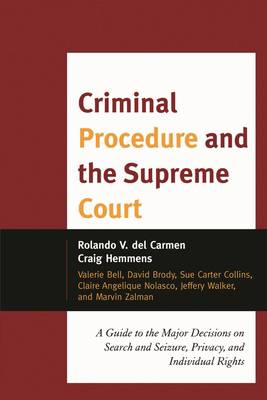
Criminal Procedure and the Supreme Court
A Guide to the Major Decisions on Search and Seizure, Privacy, and Individual Rights
Rolando V Del Carmen, Craig Hemmens
Hardcover | Engels
€ 161,45
+ 322 punten
Omschrijving
In any episode of the popular television show Law and Order, questions of police procedure in collecting evidence often arise. Was a search legal? Was the evidence obtained lawfully? Did the police follow the rules in pursuing their case? While the show depicts fictional cases and scenarios, police procedure with regard to search and seizure is a real and significant issue in the criminal justice system today. The subject of many Supreme Court decisions, they seriously impact the way police pursue their investigations, the way prosecutors proceed with their cases, and the way defense attorneys defend their clients. This book answers these questions and explains these decisions in accessible and easy to follow language. Each chapter explores a separate case or series of cases involving the application of the Fourth Amendment to current police investigatory practices or prosecutorial conduct of the criminal trial. The police-related cases involve topics such as searches of suspects (both prior and incident to arrest), pretext stops, the knock-and-announce rule, interrogation procedures, and the parameters of an individual's reasonable expectation of privacy. The prosecutor-related cases involve topics such as jury selection, the right to counsel, and sentencing. This important overview serves as an introduction to the realities and practicalities of police investigation and the functioning of the criminal justice system when search and seizure becomes an issue.
Specificaties
Betrokkenen
- Auteur(s):
- Uitgeverij:
Inhoud
- Aantal bladzijden:
- 382
- Taal:
- Engels
Eigenschappen
- Productcode (EAN):
- 9781442201569
- Verschijningsdatum:
- 15/09/2010
- Uitvoering:
- Hardcover
- Formaat:
- Ongenaaid / garenloos gebonden
- Afmetingen:
- 155 mm x 231 mm
- Gewicht:
- 703 g


Alleen bij Standaard Boekhandel
+ 322 punten op je klantenkaart van Standaard Boekhandel
AANGERADEN


Beoordelingen
We publiceren alleen reviews die voldoen aan de voorwaarden voor reviews. Bekijk onze voorwaarden voor reviews.