


- Afhalen na 1 uur in een winkel met voorraad
- Gratis thuislevering in België vanaf € 30
- Ruim aanbod met 7 miljoen producten
- Afhalen na 1 uur in een winkel met voorraad
- Gratis thuislevering in België vanaf € 30
- Ruim aanbod met 7 miljoen producten





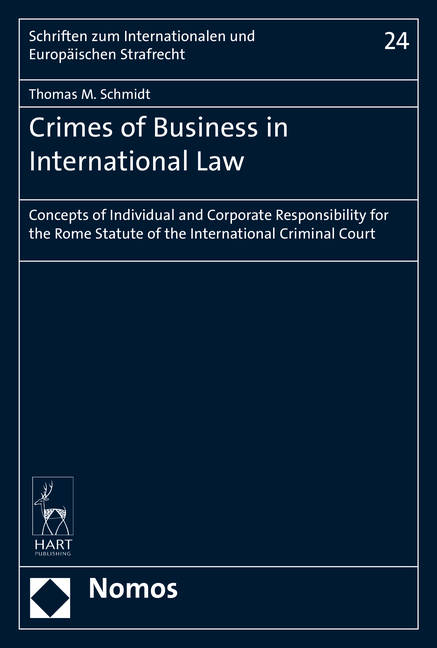
Crimes of Business in International Law
Concepts of Individual and Corporate Responsibility for the Rome Statute of the International Criminal Court
Thomas M. Schmidt
€ 208,45
+ 416 punten
Omschrijving
Preventing contributions to serious human rights violations in the course of business activity is a matter of prime importance to the international community. With a view to business actors providing infrastructure, funding or other means for the commission of crimes, this study presents concepts for assessing their individual responsibility under the Rome Statute of the International Criminal Court. To this end, the author expands upon foundational German scholarship and scrutinizes the Court s jurisprudence on commission and civilian superior responsibility, in particular its recourse to the control over the crime theory. The book examines the necessity to exempt socially valuable business activity from such responsibility from a human rights perspective. An interdisciplinary approach to the proposal to extend the Court s jurisdiction to corporate actors identifies as a major obstacle to statutory reform the unresolved conflict between diverging views on the reality of organizations.
Specificaties
Betrokkenen
- Auteur(s):
- Uitgeverij:
Inhoud
- Aantal bladzijden:
- 400
- Taal:
- Engels
- Reeks:
- Reeksnummer:
- nr. 24
Eigenschappen
- Productcode (EAN):
- 9783848725441
- Verschijningsdatum:
- 11/01/2016
- Uitvoering:
- Hardcover
- Afmetingen:
- 153 mm x 227 mm
- Gewicht:
- 654 g


Alleen bij Standaard Boekhandel
+ 416 punten op je klantenkaart van Standaard Boekhandel
CADEAU


Beoordelingen
We publiceren alleen reviews die voldoen aan de voorwaarden voor reviews. Bekijk onze voorwaarden voor reviews.