


- Afhalen na 1 uur in een winkel met voorraad
- Gratis thuislevering in België vanaf € 30
- Ruim aanbod met 7 miljoen producten
- Afhalen na 1 uur in een winkel met voorraad
- Gratis thuislevering in België vanaf € 30
- Ruim aanbod met 7 miljoen producten





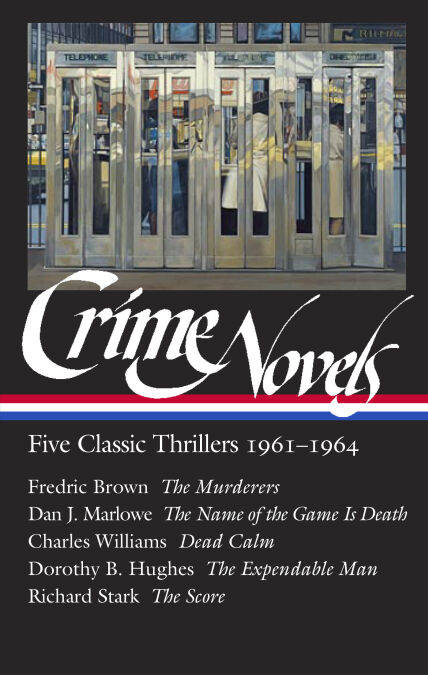
Crime Novels: Five Classic Thrillers 1961-1964 (LOA #370) E-BOOK
The Murderers / The Name of the Game Is Death / Dead Calm / The Expendable Man / The Score
Fredric Brown, Dan J. Marlowe, Dorothy B. Hughes, Richard Stark
E-book | Engels
€ 39,43
+ 39 punten
Uitvoering
Omschrijving
In the 1960s the masters of crime fiction expanded the genre’s literary and psychological possibilities with audacious new themes, forms, and subject matter—here are five of their finest works
This is the first of two volumes gathering the best American crime fiction of the 1960s, nine novels of astonishing variety and inventiveness that pulse with the energies of that turbulent, transformative decade.
In The Murderers (1961) by Fredric Brown, an out-of-work actor, hanging out with Beat drifters on the fringes of Hollywood, concocts a murder scheme that devolves into nightmare. This late work by a master in many genres is one of his darkest and most ingenious.
Dan J. Marlowe’s The Name of the Game Is Death (1962) channels the inner life of a violent criminal who freely acknowledges the truth of a prison psychiatrist’s diagnosis: “Your values are not civilized values.” Written with unnerving emotional authenticity, the story hurtles toward an annihilating climax.
Charles Williams drew on his experience in the merchant marine for his thriller Dead Calm (1963). A newlywed couple alone on a small yacht find themselves at the mercy of the mysterious survivor they have rescued from a sinking ship, in a suspenseful story that chillingly evokes the perils of the open ocean.
In the beautifully told and sharply observant The Expendable Man (1963), Dorothy B. Hughes’s final masterpiece of suspense, a young man in the American Southwest runs afoul of racial assumptions after he picks up a hitchhiker who soon turns up dead.
In twenty-four brilliantly constructed novels, Richard Stark (a pen name of Donald Westlake) charted the career of Parker, a hard-nosed professional thief, with rigorous clarity. The Score (1964), a stand-out in the series, finds Parker and his criminal associates hatching a plot to rob simultaneously all the jewelry stores, payroll offices, and banks in a remote Western mining town, only to come up against the human limits of even the most intricate planning.
Volume features include an introduction by editor Geoffrey O'Brien (Hardboiled America), newly researched biographies of the writers and helpful notes, and an essay on textual selection.
This is the first of two volumes gathering the best American crime fiction of the 1960s, nine novels of astonishing variety and inventiveness that pulse with the energies of that turbulent, transformative decade.
In The Murderers (1961) by Fredric Brown, an out-of-work actor, hanging out with Beat drifters on the fringes of Hollywood, concocts a murder scheme that devolves into nightmare. This late work by a master in many genres is one of his darkest and most ingenious.
Dan J. Marlowe’s The Name of the Game Is Death (1962) channels the inner life of a violent criminal who freely acknowledges the truth of a prison psychiatrist’s diagnosis: “Your values are not civilized values.” Written with unnerving emotional authenticity, the story hurtles toward an annihilating climax.
Charles Williams drew on his experience in the merchant marine for his thriller Dead Calm (1963). A newlywed couple alone on a small yacht find themselves at the mercy of the mysterious survivor they have rescued from a sinking ship, in a suspenseful story that chillingly evokes the perils of the open ocean.
In the beautifully told and sharply observant The Expendable Man (1963), Dorothy B. Hughes’s final masterpiece of suspense, a young man in the American Southwest runs afoul of racial assumptions after he picks up a hitchhiker who soon turns up dead.
In twenty-four brilliantly constructed novels, Richard Stark (a pen name of Donald Westlake) charted the career of Parker, a hard-nosed professional thief, with rigorous clarity. The Score (1964), a stand-out in the series, finds Parker and his criminal associates hatching a plot to rob simultaneously all the jewelry stores, payroll offices, and banks in a remote Western mining town, only to come up against the human limits of even the most intricate planning.
Volume features include an introduction by editor Geoffrey O'Brien (Hardboiled America), newly researched biographies of the writers and helpful notes, and an essay on textual selection.
Specificaties
Betrokkenen
- Auteur(s):
- Uitgeverij:
Inhoud
- Aantal bladzijden:
- 950
- Taal:
- Engels
Eigenschappen
- Productcode (EAN):
- 9781598537413
- Verschijningsdatum:
- 11/09/2023
- Uitvoering:
- E-book
- Beveiligd met:
- Adobe DRM
- Formaat:
- ePub


Alleen bij Standaard Boekhandel
+ 39 punten op je klantenkaart van Standaard Boekhandel
Cadeau

AANGERADEN


Beoordelingen
We publiceren alleen reviews die voldoen aan de voorwaarden voor reviews. Bekijk onze voorwaarden voor reviews.