


- Afhalen na 1 uur in een winkel met voorraad
- Gratis thuislevering in België vanaf € 30
- Ruim aanbod met 7 miljoen producten
- Afhalen na 1 uur in een winkel met voorraad
- Gratis thuislevering in België vanaf € 30
- Ruim aanbod met 7 miljoen producten





Omschrijving
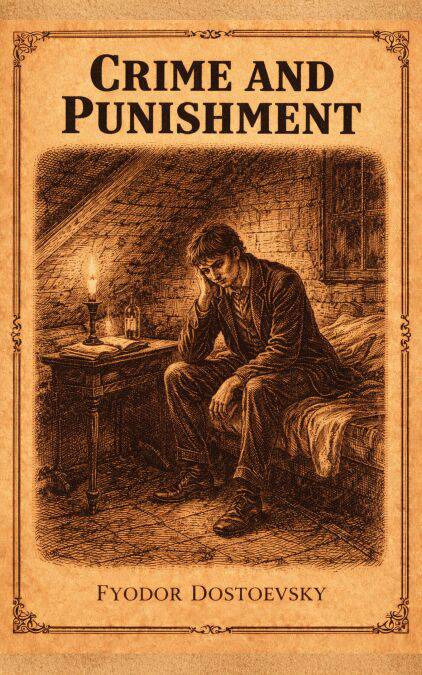
Crime and Punishment is a towering masterpiece of psychological fiction that delves into guilt, morality, redemption, and the turbulent depths of the human conscience. In this profound and gripping novel, Fyodor Dostoevsky explores the devastating consequences of a single, irreversible act and the spiritual struggle that follows.
The story centers on Rodion Raskolnikov, a destitute former student living in St. Petersburg. Intelligent, proud, and isolated, he develops a dangerous theory: that certain extraordinary individuals possess the moral right to transgress laws for a higher purpose. Driven by desperation and intellectual arrogance, he commits a brutal murder, believing himself justified and immune to remorse.
Yet the true punishment is not delivered by the courts—it unfolds within his own mind. Tormented by guilt, paranoia, and feverish confusion, Raskolnikov spirals into psychological torment. His interactions with a cast of vividly drawn characters—among them the compassionate and self-sacrificing Sonia, the relentless investigator Porfiry Petrovich, and his devoted mother and sister—intensify his inner conflict. Each encounter forces him to confront the moral implications of his philosophy and the emotional cost of his actions.
Dostoevsky masterfully portrays the suffocating atmosphere of poverty-stricken urban life, using the crowded streets and claustrophobic rooms of the city to mirror the protagonist's mental anguish. The novel probes profound questions: What defines justice? Can intellectual reasoning justify immoral acts? Is redemption possible after grave wrongdoing? Through Raskolnikov's suffering, the narrative examines the limits of rationalism and the necessity of compassion, humility, and faith.
Dark, suspenseful, and deeply philosophical, Crime and Punishment is more than a tale of murder—it is an exploration of conscience and the human capacity for both destruction and spiritual renewal. Dostoevsky's insight into the complexities of guilt and redemption has ensured the novel's enduring place as one of the greatest achievements in world literature.
The story centers on Rodion Raskolnikov, a destitute former student living in St. Petersburg. Intelligent, proud, and isolated, he develops a dangerous theory: that certain extraordinary individuals possess the moral right to transgress laws for a higher purpose. Driven by desperation and intellectual arrogance, he commits a brutal murder, believing himself justified and immune to remorse.
Yet the true punishment is not delivered by the courts—it unfolds within his own mind. Tormented by guilt, paranoia, and feverish confusion, Raskolnikov spirals into psychological torment. His interactions with a cast of vividly drawn characters—among them the compassionate and self-sacrificing Sonia, the relentless investigator Porfiry Petrovich, and his devoted mother and sister—intensify his inner conflict. Each encounter forces him to confront the moral implications of his philosophy and the emotional cost of his actions.
Dostoevsky masterfully portrays the suffocating atmosphere of poverty-stricken urban life, using the crowded streets and claustrophobic rooms of the city to mirror the protagonist's mental anguish. The novel probes profound questions: What defines justice? Can intellectual reasoning justify immoral acts? Is redemption possible after grave wrongdoing? Through Raskolnikov's suffering, the narrative examines the limits of rationalism and the necessity of compassion, humility, and faith.
Dark, suspenseful, and deeply philosophical, Crime and Punishment is more than a tale of murder—it is an exploration of conscience and the human capacity for both destruction and spiritual renewal. Dostoevsky's insight into the complexities of guilt and redemption has ensured the novel's enduring place as one of the greatest achievements in world literature.
Specificaties
Betrokkenen
- Auteur(s):
- Uitgeverij:
Inhoud
- Aantal bladzijden:
- 689
- Taal:
- Engels
Eigenschappen
- Productcode (EAN):
- 9786177881567
- Verschijningsdatum:
- 13/02/2026
- Uitvoering:
- E-book
- Beveiligd met:
- Digital watermarking
- Formaat:
- ePub


Alleen bij Standaard Boekhandel
Cadeau

AANGERADEN


Beoordelingen
We publiceren alleen reviews die voldoen aan de voorwaarden voor reviews. Bekijk onze voorwaarden voor reviews.