


- Afhalen na 1 uur in een winkel met voorraad
- Gratis thuislevering in België vanaf € 30
- Ruim aanbod met 7 miljoen producten
- Afhalen na 1 uur in een winkel met voorraad
- Gratis thuislevering in België vanaf € 30
- Ruim aanbod met 7 miljoen producten





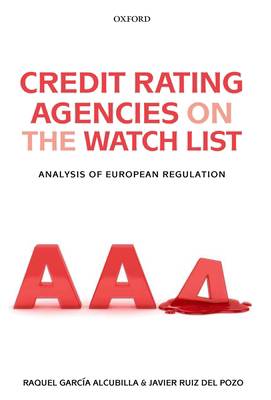
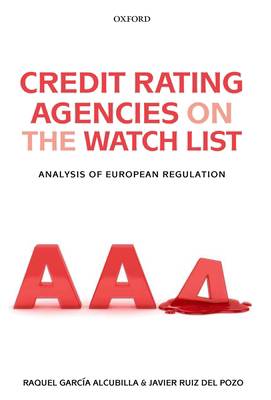
Credit Rating Agencies on the Watch List
Analysis of European Regulation
Raquel Garcia Alcubilla, Javier Ruiz del Pozo, Raquel Garcaia Alcubilla
Hardcover | Engels
€ 212,95
+ 425 punten
Eenvoudig bestellen
Veilig betalen


Gratis thuislevering vanaf € 30 (via bpost)
Gratis levering in je Standaard Boekhandel
Omschrijving
Credit Rating Agencies have been criticised for their role in the financial crisis by understating risk and providing complex securities. The US subprime mortgage crisis highlighted deficiencies in the rating agencies' activities and this led to an international consensus to establish regulation of the rating business. Written by those involved in developing the EU Regulation, this book explains the global initiatives undertaken by the G-20, the Financial Stability Board, and IOSCO to address failures within the credit rating industry. It provides an overview of the new European System of Financial Supervisors implemented as a reaction to the crisis and examines the supervisory and enforcement powers of ESMA, the new authority in charge of the registration and oversight of rating agencies.
Through an in-depth analysis of the European Regulation's requirements on governance, conflicts of interest, methodologies, disclosures, and transparency, the book provides a clear explanation of how rating agencies operate and how the identified failures have been addressed. This is complemented with an analysis of guidance from supervisors (ESMA and EBA), IOSCO's recommendations, and US legislation. The book discusses possible new regulatory developments in areas such as the agencies' business model, competition, civil liability, and ratings of sovereign debt. It concludes with the authors' support for an enhanced regulatory and oversight coordination at global level, a reduction of the existing over-reliance on ratings, and a concentration of resources on the enforcement of the current regulatory regime.
Through an in-depth analysis of the European Regulation's requirements on governance, conflicts of interest, methodologies, disclosures, and transparency, the book provides a clear explanation of how rating agencies operate and how the identified failures have been addressed. This is complemented with an analysis of guidance from supervisors (ESMA and EBA), IOSCO's recommendations, and US legislation. The book discusses possible new regulatory developments in areas such as the agencies' business model, competition, civil liability, and ratings of sovereign debt. It concludes with the authors' support for an enhanced regulatory and oversight coordination at global level, a reduction of the existing over-reliance on ratings, and a concentration of resources on the enforcement of the current regulatory regime.
Specificaties
Betrokkenen
- Auteur(s):
- Uitgeverij:
Inhoud
- Aantal bladzijden:
- 312
- Taal:
- Engels
Eigenschappen
- Productcode (EAN):
- 9780199608867
- Verschijningsdatum:
- 23/05/2012
- Uitvoering:
- Hardcover
- Formaat:
- Genaaid
- Afmetingen:
- 163 mm x 234 mm
- Gewicht:
- 612 g


Alleen bij Standaard Boekhandel
+ 425 punten op je klantenkaart van Standaard Boekhandel
CADEAU

AANGERADEN


Beoordelingen
We publiceren alleen reviews die voldoen aan de voorwaarden voor reviews. Bekijk onze voorwaarden voor reviews.