


- Afhalen na 1 uur in een winkel met voorraad
- Gratis thuislevering in België vanaf € 30
- Ruim aanbod met 7 miljoen producten
- Afhalen na 1 uur in een winkel met voorraad
- Gratis thuislevering in België vanaf € 30
- Ruim aanbod met 7 miljoen producten





€ 63,45
+ 126 punten
Omschrijving
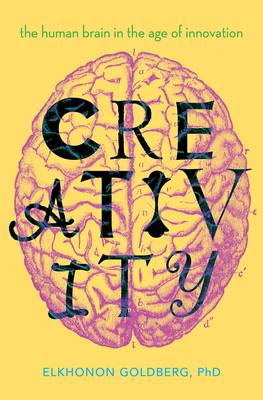
What is the nature of human creativity? What are the brain processes behind its mystique? What are the evolutionary roots of creativity? How does culture help shape individual creativity? Creativity: The Human Brain in the Age of Innovation by Elkhonon Goldberg is arguably the first ever book
to address these and other questions in a way that is both rigorous and engaging, demystifying human creativity for the general public. The synthesis of neuroscience and the humanities is a unique feature of the book, making it of interest to an unusually broad range of readership. Drawing on a
number of cutting-edge discoveries from brain research as well as on his own insights as a neuroscientist and neuropsychologist, Goldberg integrates them with a wide-ranging discussion of history, culture, and evolution to arrive at an original, compelling, and at times provocative understanding of
the nature of human creativity. To make his argument, Goldberg discusses the origins of language, the nature of several neurological disorders, animal cognition, virtual reality, and even artificial intelligence. In the process, he takes the reader to different times and places, from antiquity to
the future, and from Western Europe to South-East Asia. He makes bold predictions about the future directions of creativity and innovation in society, their multiple biological and cultural roots and expressions, about how they will shape society for generations to come, and even how they will
change the ways the human brain develops and ages.
to address these and other questions in a way that is both rigorous and engaging, demystifying human creativity for the general public. The synthesis of neuroscience and the humanities is a unique feature of the book, making it of interest to an unusually broad range of readership. Drawing on a
number of cutting-edge discoveries from brain research as well as on his own insights as a neuroscientist and neuropsychologist, Goldberg integrates them with a wide-ranging discussion of history, culture, and evolution to arrive at an original, compelling, and at times provocative understanding of
the nature of human creativity. To make his argument, Goldberg discusses the origins of language, the nature of several neurological disorders, animal cognition, virtual reality, and even artificial intelligence. In the process, he takes the reader to different times and places, from antiquity to
the future, and from Western Europe to South-East Asia. He makes bold predictions about the future directions of creativity and innovation in society, their multiple biological and cultural roots and expressions, about how they will shape society for generations to come, and even how they will
change the ways the human brain develops and ages.
Specificaties
Betrokkenen
- Auteur(s):
- Uitgeverij:
Inhoud
- Aantal bladzijden:
- 296
- Taal:
- Engels
Eigenschappen
- Productcode (EAN):
- 9780190466497
- Verschijningsdatum:
- 1/02/2018
- Uitvoering:
- Hardcover
- Formaat:
- Genaaid
- Afmetingen:
- 155 mm x 239 mm
- Gewicht:
- 544 g


Alleen bij Standaard Boekhandel
+ 126 punten op je klantenkaart van Standaard Boekhandel
Cadeau

AANGERADEN


Beoordelingen
We publiceren alleen reviews die voldoen aan de voorwaarden voor reviews. Bekijk onze voorwaarden voor reviews.