


- Afhalen na 1 uur in een winkel met voorraad
- Gratis thuislevering in België vanaf € 30
- Ruim aanbod met 7 miljoen producten
- Afhalen na 1 uur in een winkel met voorraad
- Gratis thuislevering in België vanaf € 30
- Ruim aanbod met 7 miljoen producten





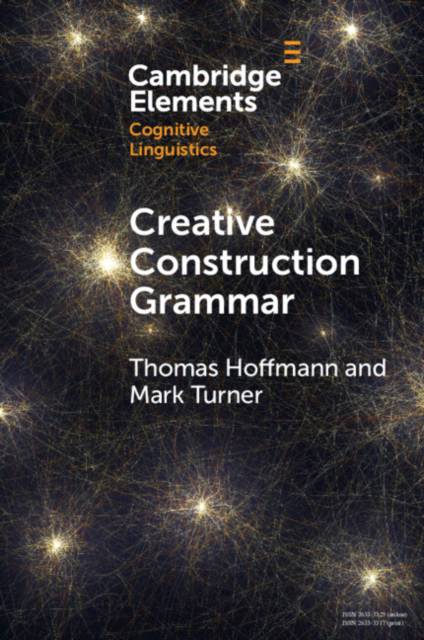
Omschrijving
Constructions are long-term pairings in memory of form and meaning. How are they created and learned, how do they change, and how do they combine into new utterances (constructs, communicative performances) in working memory? Drawing on evidence from word-formation (blending, Noun-Noun-compounds) over idioms and argument structure constructions to multimodal communication, we argue that computational metaphors such as 'unification' or 'constraint-satisfaction' do not constitute a cognitively adequate explanation. Instead, we put forward the idea that construction combination is performed by Conceptual Blending - a domain-general process of higher cognition that has been used to explain complex human behavior such as, inter alia, scientific discovery, reasoning, art, music, dance, math, social cognition, and religion. This title is also available as Open Access on Cambridge Core.
Specificaties
Betrokkenen
- Auteur(s):
- Uitgeverij:
Inhoud
- Aantal bladzijden:
- 88
- Taal:
- Engels
- Reeks:
Eigenschappen
- Productcode (EAN):
- 9781009635271
- Verschijningsdatum:
- 8/01/2026
- Uitvoering:
- Paperback
- Formaat:
- Trade paperback (VS)
- Afmetingen:
- 152 mm x 229 mm
- Gewicht:
- 127 g


Alleen bij Standaard Boekhandel
+ 72 punten op je klantenkaart van Standaard Boekhandel
Cadeau

AANGERADEN


Beoordelingen
We publiceren alleen reviews die voldoen aan de voorwaarden voor reviews. Bekijk onze voorwaarden voor reviews.