



Bedankt voor het vertrouwen het afgelopen jaar! Om jou te bedanken bieden we GRATIS verzending (in België) aan op alles gedurende de hele maand januari.
- Afhalen na 1 uur in een winkel met voorraad
- In januari gratis thuislevering in België
- Ruim aanbod met 7 miljoen producten
Bedankt voor het vertrouwen het afgelopen jaar! Om jou te bedanken bieden we GRATIS verzending (in België) aan op alles gedurende de hele maand januari.
- Afhalen na 1 uur in een winkel met voorraad
- In januari gratis thuislevering in België
- Ruim aanbod met 7 miljoen producten





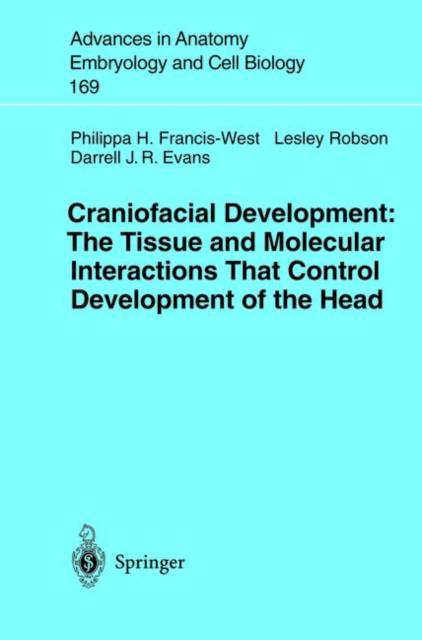
Craniofacial Development the Tissue and Molecular Interactions That Control Development of the Head
The Tissue and Molecular Interactions That Control Development of the Head
Philippa H Francis-West, Lesley Robson, Darrell J R Evans
€ 167,95
+ 335 punten
Omschrijving
Craniofacial development is a multistep and intricate process initially involving a number of inductive interactions that control neural and neural crest development, which are followed by a series of epithelial-mesenchymal interactions that control outgrowth, patterning, and skeletal differentiation. Certain aspects of craniofacial development are unique developmental processes in higher vertebrates. First, in higher vertebrates the cranial neural crest, in contrast to the trunk neural crest, gives rise to the skeletal structures. These skeletal elements include those comprising mem- brane bone and secondary cartilage, which with the exception of the clavicle are tissue types found exclusively in the head in higher vertebrates. Second, with the exception of the tongue, the origin of the musculature is distinct from other regions of the body. The body and tongue muscles are formed from the segmented epithelial somites whilst the head musculature is formed from unsegmented paraxial and prechordal mesoderm. Furthermore, the signalling cascades that control myogenic differentia- tion appear to be distinct as determined by gene expression and the response of myogenic cells to growth factors. Finally, the neurogenic placodes, which give rise to the sensory organs and some cranial ganglia, are only found in the head. Over recent years, there have been significant advances in our knowledge of the molecular proc- esses that control craniofacial development in a number of animal models. This has given insight into the genes that control many aspects of head development from the initial induction of the head to the final stages of differentiation.
Specificaties
Betrokkenen
- Auteur(s):
- Uitgeverij:
Inhoud
- Aantal bladzijden:
- 144
- Taal:
- Engels
- Reeks:
- Reeksnummer:
- nr. 169
Eigenschappen
- Productcode (EAN):
- 9783540003632
- Verschijningsdatum:
- 15/04/2003
- Uitvoering:
- Paperback
- Formaat:
- Trade paperback (VS)
- Afmetingen:
- 161 mm x 238 mm
- Gewicht:
- 299 g


Alleen bij Standaard Boekhandel
+ 335 punten op je klantenkaart van Standaard Boekhandel
SOLDEN


Beoordelingen
We publiceren alleen reviews die voldoen aan de voorwaarden voor reviews. Bekijk onze voorwaarden voor reviews.