


- Afhalen na 1 uur in een winkel met voorraad
- Gratis thuislevering in België vanaf € 30
- Ruim aanbod met 7 miljoen producten
- Afhalen na 1 uur in een winkel met voorraad
- Gratis thuislevering in België vanaf € 30
- Ruim aanbod met 7 miljoen producten





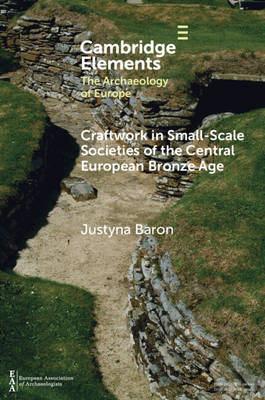
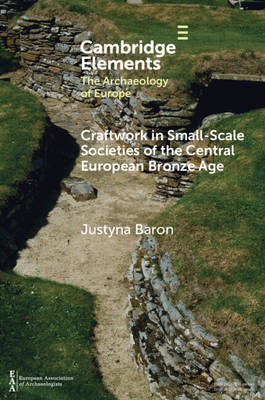
Craftwork in Small-Scale Societies of the Central European Bronze Age
Justyna Baron
€ 36,45
+ 72 punten
Uitvoering
Omschrijving
The Element examines various facets of craftwork in small-scale societies that thrived in much of Central Europe during the Bronze Age (2300-800 BCE). These societies exhibited distinct structures and types of social bonds that formed the social and spatial backdrop for craft practices. Since most Bronze Age villages were inhabited by small groups, all forms of crafting were at least partially communal, fostering the exchange of experiences, skills, and knowledge both within and across different production areas. The public nature of crafting practices also encouraged discussions about applied tools, methods, skills, and the quality of the final products. The author explores overarching questions about communication and knowledge transfer within and beyond small groups, drawing on archaeological and ethnographic data. This includes considerations of standardization, personalization, imitation, seasonality, and cross-crafting. This title is also available as Open Access on Cambridge Core.
Specificaties
Betrokkenen
- Auteur(s):
- Uitgeverij:
Inhoud
- Aantal bladzijden:
- 98
- Taal:
- Engels
- Reeks:
Eigenschappen
- Productcode (EAN):
- 9781009611299
- Verschijningsdatum:
- 21/05/2026
- Uitvoering:
- Paperback
- Formaat:
- Trade paperback (VS)
- Afmetingen:
- 152 mm x 229 mm
- Gewicht:
- 140 g


Alleen bij Standaard Boekhandel
+ 72 punten op je klantenkaart van Standaard Boekhandel
Cadeau

AANGERADEN


Beoordelingen
We publiceren alleen reviews die voldoen aan de voorwaarden voor reviews. Bekijk onze voorwaarden voor reviews.