


- Afhalen na 1 uur in een winkel met voorraad
- Gratis thuislevering in België vanaf € 30
- Ruim aanbod met 7 miljoen producten
- Afhalen na 1 uur in een winkel met voorraad
- Gratis thuislevering in België vanaf € 30
- Ruim aanbod met 7 miljoen producten





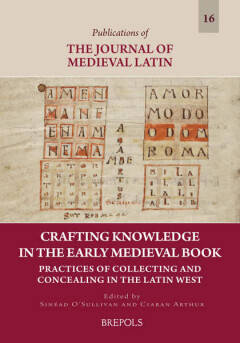
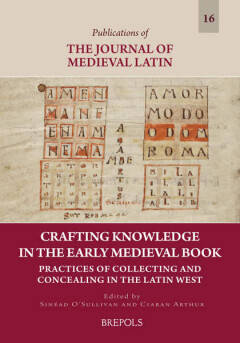
Crafting Knowledge in the Early Medieval Book
Practices of Collecting and Concealing in the Latin West
Sinéad O'Sullivan
€ 121,90
+ 243 punten
Omschrijving
Collection and concealment were hallmarks of early medieval book culture. Materials of all kinds were collected, collated, concealed, condensed, correlated, paraphrased, reorganised, and repurposed in early medieval manuscripts. This volume of essays explores how knowledge was made in the early medieval book in the Latin West through two interrelated practices: collecting and concealing. It provides case studies across cultures and areas (e.g. exegesis, glossography, history, lexicography, literature, poetry, vernacular and Latin learning). Collectio underpinned scholarly productions from miscellanies to vademecums. It was at the heart of major enterprises such as the creation of commentaries, encyclopaedic compendia, glosses, glossaries, glossae collectae, and word lists. As a scholarly practice, collectio accords with the construction of inventories of inherited materials, the ruminative imperative of early medieval exegesis, and a kind of reading that required concentration. Concealment likewise played a key role in early medieval book culture. Obscuration was in line with well-known interpretative practices aimed at rendering knowledge less than immediate. This volume explores the practices of obscuring that predate the twelfth-century predilection, long recognised by historians, for reading that penetrates beneath the "covering" (integumentum, involucrum) to reveal the hidden truth. Cumulatively, the papers spotlight the currency of two crucial practices in early medieval book culture - the practices of collection and concealment. They demonstrate that early medieval authors, artists, compilers, commentators, and scribes were conspicuous collectors and concealers of knowledge.
Specificaties
Betrokkenen
- Auteur(s):
- Uitgeverij:
Inhoud
- Aantal bladzijden:
- 532
- Taal:
- Engels
- Reeks:
- Reeksnummer:
- nr. 16
Eigenschappen
- Productcode (EAN):
- 9782503602479
- Verschijningsdatum:
- 13/07/2023
- Uitvoering:
- Paperback
- Formaat:
- Trade paperback (VS)
- Afmetingen:
- 173 mm x 254 mm
- Gewicht:
- 1056 g


Alleen bij Standaard Boekhandel
+ 243 punten op je klantenkaart van Standaard Boekhandel
Cadeau

AANGERADEN


Beoordelingen
We publiceren alleen reviews die voldoen aan de voorwaarden voor reviews. Bekijk onze voorwaarden voor reviews.