


- Afhalen na 1 uur in een winkel met voorraad
- Gratis thuislevering in België vanaf € 30
- Ruim aanbod met 7 miljoen producten
- Afhalen na 1 uur in een winkel met voorraad
- Gratis thuislevering in België vanaf € 30
- Ruim aanbod met 7 miljoen producten





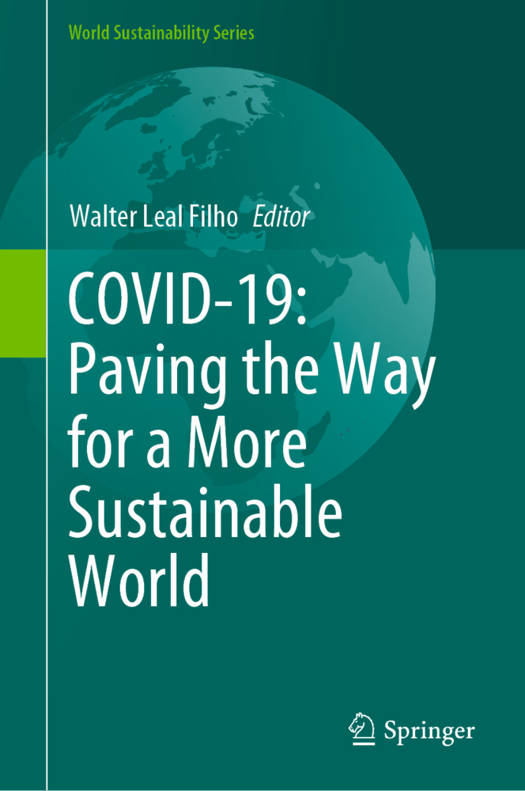
Covid-19: Paving the Way for a More Sustainable World
€ 151,95
+ 303 punten
Omschrijving
This book gathers and disseminates opinions, viewpoints, studies, forecasts, and practical projects which illustrate the various pathways sustainability research and practice may follow in the future, as the world recovers from the COVID-19 pandemic and prepares itself to the possibilities of having to cope with similar crisis, a product of the Inter-University Sustainable Development Research Programme (IUSDRP) https: //www.haw-hamburg.de/en/ftz-nk/programmes/iusdrp.html and the European School of Sustainability Science and Research (ESSSR) https: //esssr.eu/. The COVID-19 pandemic has led to severe human suffering, and to substantial damages to economies around the globe, affecting both rich countries and developing ones. The aftermath of the epidemic is also expected to be felt for sometime. This will also include a wide range of impacts in the ways sustainable development is perceived, and how the principles of sustainability are practised.
There is now a pressing need to generate new literature on the connections between COVID-19 and sustainability. This is so for two main reasons. Firstly, the world crisis triggered by COVID-19 has severely damaged the world economy, worsening poverty, causing hardships, and endangering livelihoods. Together, these impacts may negatively influence the implementation of sustainable development as a whole, and of the UN Sustainable Development Goals in particular. These potential and expected impacts need to be better understood and quantified, hence providing a support basis for future recovery efforts. Secondly, the shutdown caused by COVID-19 has also been having a severe impact on teaching and research, especially -but not only - on matters related to sustainability. This may also open new opportunities (e.g. less travel, more Internet-based learning), which should be explored further, especially in the case of future pandemics, a scenario which cannot be excluded.
The book meets these perceived needs.
There is now a pressing need to generate new literature on the connections between COVID-19 and sustainability. This is so for two main reasons. Firstly, the world crisis triggered by COVID-19 has severely damaged the world economy, worsening poverty, causing hardships, and endangering livelihoods. Together, these impacts may negatively influence the implementation of sustainable development as a whole, and of the UN Sustainable Development Goals in particular. These potential and expected impacts need to be better understood and quantified, hence providing a support basis for future recovery efforts. Secondly, the shutdown caused by COVID-19 has also been having a severe impact on teaching and research, especially -but not only - on matters related to sustainability. This may also open new opportunities (e.g. less travel, more Internet-based learning), which should be explored further, especially in the case of future pandemics, a scenario which cannot be excluded.
The book meets these perceived needs.
Specificaties
Betrokkenen
- Uitgeverij:
Inhoud
- Aantal bladzijden:
- 480
- Taal:
- Engels
- Reeks:
Eigenschappen
- Productcode (EAN):
- 9783030692834
- Verschijningsdatum:
- 26/05/2021
- Uitvoering:
- Hardcover
- Formaat:
- Genaaid
- Afmetingen:
- 156 mm x 234 mm
- Gewicht:
- 870 g

Alleen bij Standaard Boekhandel
+ 303 punten op je klantenkaart van Standaard Boekhandel
Cadeau

AANGERADEN


Beoordelingen
We publiceren alleen reviews die voldoen aan de voorwaarden voor reviews. Bekijk onze voorwaarden voor reviews.