


- Afhalen na 1 uur in een winkel met voorraad
- Gratis thuislevering in België vanaf € 30
- Ruim aanbod met 7 miljoen producten
- Afhalen na 1 uur in een winkel met voorraad
- Gratis thuislevering in België vanaf € 30
- Ruim aanbod met 7 miljoen producten





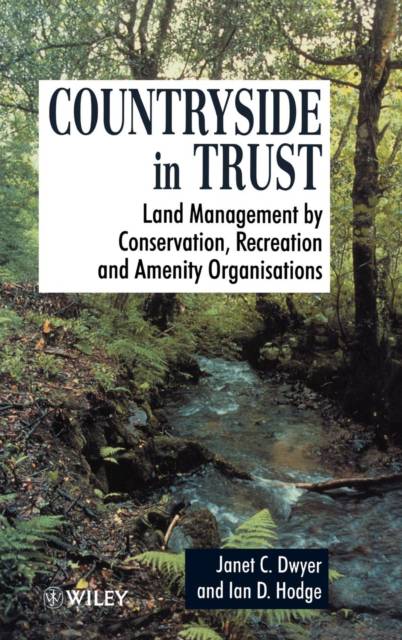
Countryside in Trust
Land Management by Conservation, Recreation and Amenity Organisations
Janet Dwyer, Ian Hodge
Hardcover | Engels
€ 362,45
+ 724 punten
Omschrijving
The development of agriculture has caused rapid changes to the rural environment. Today, with growing awareness and concern for environmental issues, there is a movement to stem further damage to the countryside and replace some of the values which have been lost. Voluntary non-profit organisations which own and manage land for countryside conservation are playing an increasingly important role in this movement. These are called CARTs Conservation, Amenity and Recreation Trusts. Countryside in Trust explores the principles behind this movement and investigates the activities of the wide range of organisations involved, both large and small, including the National Trust, The Royal Society for the Protection of Birds, and the Scottish Tree Trust. The origins and experiences of CARTs are traced in a series of chapters which examine the different types of organisation, their land management activities and finances, and their close relationship with government agencies at all levels. Finally, the authors describe the role of public policy towards CARTs and assess the implications for the future. This is the first book to examine the large numbers of landholding environmental and amenity trusts in the UK, and is essential reading for students, voluntary organisations, conservation groups, land owners and local authorities.
Specificaties
Betrokkenen
- Auteur(s):
- Uitgeverij:
Inhoud
- Aantal bladzijden:
- 314
- Taal:
- Engels
Eigenschappen
- Productcode (EAN):
- 9780471948711
- Verschijningsdatum:
- 1/05/1996
- Uitvoering:
- Hardcover
- Formaat:
- Genaaid
- Afmetingen:
- 158 mm x 234 mm
- Gewicht:
- 625 g



Alleen bij Standaard Boekhandel
+ 724 punten op je klantenkaart van Standaard Boekhandel
Cadeau

AANGERADEN


Beoordelingen
We publiceren alleen reviews die voldoen aan de voorwaarden voor reviews. Bekijk onze voorwaarden voor reviews.