


- Afhalen na 1 uur in een winkel met voorraad
- Gratis thuislevering in België vanaf € 30
- Ruim aanbod met 7 miljoen producten
- Afhalen na 1 uur in een winkel met voorraad
- Gratis thuislevering in België vanaf € 30
- Ruim aanbod met 7 miljoen producten





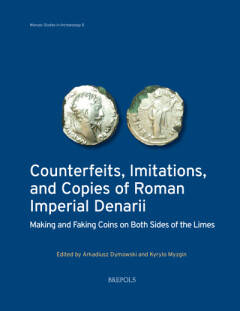
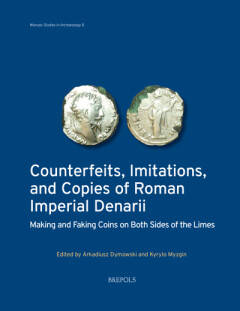
Counterfeits, Imitations, and Copies of Roman Imperial Denarii
Making and Faking Coins on Both Sides of the Limes
Arkadiusz Dymowski
€ 84,80
+ 169 punten
Omschrijving
Roman Imperial denarii from the first-third centuries AD are, almost without exception, the most common ancient coinage to be found in Central, Northern, and Eastern Europe beyond the Roman limes. Perhaps surprisingly, however, a significant percentage of these coins are in fact counterfeit, comprised largely of denarii subaerati (plated denarii, fourrees) and denarii flati (base metal cast copies). Moreover, these fake coins were not only manufactured by Romans themselves, but also by barbarian peoples in Eastern Europe, far from the Roman limes, in what should be considered a mass-scale phenomena. This volume draws together archaeological, numismatic, and historical research in order to offer a new assessment of the production and use of counterfeit Roman Imperial denarii both within the European provinces of the Roman Empire and in European Barbaricum. Drawing on the results of the research project Barbarian Fakers. Manufacturing and Use of Counterfeit Roman Imperial Denarii in East-Central Europe in Antiquity, from the University of Warsaw, the papers gathered here explore the transfer of ideas, technology, and finished products that led to the transfer of counterfeit coinage across the Empire, and shed light on how, why, and when such coins were created and used.
Specificaties
Betrokkenen
- Auteur(s):
- Uitgeverij:
Inhoud
- Aantal bladzijden:
- 220
- Taal:
- Engels
- Reeks:
- Reeksnummer:
- nr. 8
Eigenschappen
- Productcode (EAN):
- 9782503612447
- Verschijningsdatum:
- 20/02/2025
- Uitvoering:
- Hardcover
- Formaat:
- Genaaid
- Gewicht:
- 331 g


Alleen bij Standaard Boekhandel
+ 169 punten op je klantenkaart van Standaard Boekhandel
Cadeau

AANGERADEN


Beoordelingen
We publiceren alleen reviews die voldoen aan de voorwaarden voor reviews. Bekijk onze voorwaarden voor reviews.