


- Afhalen na 1 uur in een winkel met voorraad
- Gratis thuislevering in België vanaf € 30
- Ruim aanbod met 7 miljoen producten
- Afhalen na 1 uur in een winkel met voorraad
- Gratis thuislevering in België vanaf € 30
- Ruim aanbod met 7 miljoen producten





€ 86,45
+ 172 punten
Omschrijving
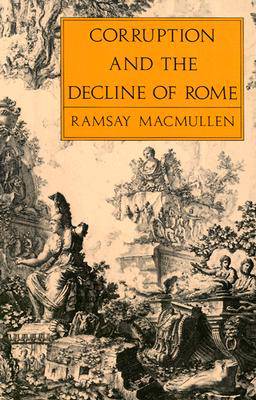
Prominent historian Ramsay MacMullen here offers a new perspective on the decline and fall of Rome. MacMullen argues that a key factor in Rome's fall was the steady loss of focus and control over government as its aims were thwarted for private gain by high-ranking bureaucrats and military leaders. Written in an informal and lively style, his book--the culmination of years of research and thoughtful analysis--provides a fascinating, fresh line of investigation and shows convincingly that the decline of Rome was a gradual, insidious process rather than a climactic event.
"An important book which will initiate a long debate. . . . What is new in MacMullen's argument is not the existence of this corruption but its sheer scale and long-term global effects. . . . A vivid and frightening picture of how a great state and civilization, the construction of centuries of painfully acquired political culture, can be cripplingly undermined."--Stephen Williams, History Today
"A powerful account of the vices of late Roman society, which certainly helps us to understand some aspects of its partial fall."--Jasper Griffin, New York Review of Books
"All students of history must welcome this wide-ranging book from so eminent an authority. MacMullen's knowledge of the ancient evidence is encyclopedic and his deceptively casual style and deliberate avoidance of technical terms make this an accessible and stimulating book for the general reader as well as for the specialist."--Jill Harries, International History Review
"MacMullen's book is excellent: rich and learned in detail, lively in style, and in argument and insights highly stimulating."--S. J. B. Barnish, Times Higher Education Supplement
"An important book which will initiate a long debate. . . . What is new in MacMullen's argument is not the existence of this corruption but its sheer scale and long-term global effects. . . . A vivid and frightening picture of how a great state and civilization, the construction of centuries of painfully acquired political culture, can be cripplingly undermined."--Stephen Williams, History Today
"A powerful account of the vices of late Roman society, which certainly helps us to understand some aspects of its partial fall."--Jasper Griffin, New York Review of Books
"All students of history must welcome this wide-ranging book from so eminent an authority. MacMullen's knowledge of the ancient evidence is encyclopedic and his deceptively casual style and deliberate avoidance of technical terms make this an accessible and stimulating book for the general reader as well as for the specialist."--Jill Harries, International History Review
"MacMullen's book is excellent: rich and learned in detail, lively in style, and in argument and insights highly stimulating."--S. J. B. Barnish, Times Higher Education Supplement
Specificaties
Betrokkenen
- Auteur(s):
- Uitgeverij:
Inhoud
- Aantal bladzijden:
- 331
- Taal:
- Engels
Eigenschappen
- Productcode (EAN):
- 9780300047998
- Verschijningsdatum:
- 25/07/1990
- Uitvoering:
- Paperback
- Formaat:
- Trade paperback (VS)
- Afmetingen:
- 155 mm x 235 mm
- Gewicht:
- 521 g


Alleen bij Standaard Boekhandel
+ 172 punten op je klantenkaart van Standaard Boekhandel
CADEAU

AANGERADEN


Beoordelingen
We publiceren alleen reviews die voldoen aan de voorwaarden voor reviews. Bekijk onze voorwaarden voor reviews.