



Bedankt voor het vertrouwen het afgelopen jaar! Om jou te bedanken bieden we GRATIS verzending (in België) aan op alles gedurende de hele maand januari.
- Afhalen na 1 uur in een winkel met voorraad
- In januari gratis thuislevering in België
- Ruim aanbod met 7 miljoen producten
Bedankt voor het vertrouwen het afgelopen jaar! Om jou te bedanken bieden we GRATIS verzending (in België) aan op alles gedurende de hele maand januari.
- Afhalen na 1 uur in een winkel met voorraad
- In januari gratis thuislevering in België
- Ruim aanbod met 7 miljoen producten





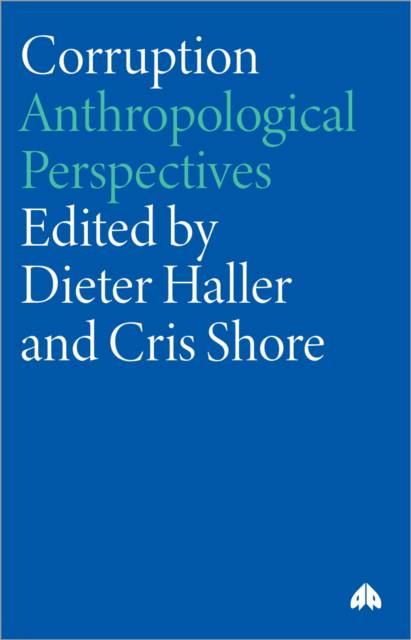
Corruption: Anthropological Perspectives
Anthropological Perspectives
€ 54,45
+ 108 punten
Omschrijving
Corruption in politics and business is, after war, perhaps the greatest threat to democracy. Academic studies of corruption tend to come from the field of International Relations, analysing systems of formal rules and institutions. This book offers a radically different perspective - it shows how anthropology can throw light on aspects of corruption that remain unexamined in international relations. The contributors reveal how corruption operates through informal rules, personal connections and the wider social contexts that govern everyday practices. They argue that patterns of corruption are part of the fabric of everyday life - wherever we live - and subsequently they are often endemic in our key institutions. The book examines corruption across a range of different contexts from transitional societies such as post-Soviet Russia and Romania, to efforts to reform or regulate institutions that are perceived to be potentially corrupt, such as the European Commission. The book also covers the Enron and WorldCom scandals, the mafia in Sicily and the USA, and the world of anti-corruption as represented by NGOs like Transparency International.
Specificaties
Betrokkenen
- Uitgeverij:
Inhoud
- Aantal bladzijden:
- 264
- Taal:
- Engels
- Reeks:
Eigenschappen
- Productcode (EAN):
- 9780745321578
- Verschijningsdatum:
- 1/07/2005
- Uitvoering:
- Paperback
- Formaat:
- Trade paperback (VS)
- Afmetingen:
- 138 mm x 216 mm
- Gewicht:
- 399 g


Alleen bij Standaard Boekhandel
+ 108 punten op je klantenkaart van Standaard Boekhandel
SOLDEN


Beoordelingen
We publiceren alleen reviews die voldoen aan de voorwaarden voor reviews. Bekijk onze voorwaarden voor reviews.