



- Afhalen na 1 uur in een winkel met voorraad
- In januari gratis thuislevering in België
- Ruim aanbod met 7 miljoen producten
- Afhalen na 1 uur in een winkel met voorraad
- In januari gratis thuislevering in België
- Ruim aanbod met 7 miljoen producten





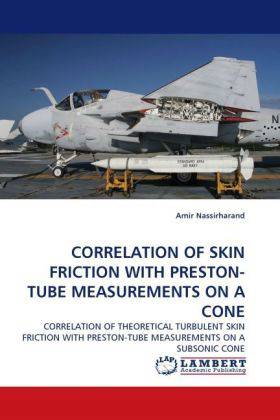
CORRELATION OF SKIN FRICTION WITH PRESTON-TUBE MEASUREMENTS ON A CONE
CORRELATION OF THEORETICAL TURBULENT SKIN FRICTION WITH PRESTON-TUBE MEASUREMENTS ON A SUBSONIC CONE
Amir Nassirharand
Paperback | Engels
€ 72,45
+ 144 punten
Omschrijving
This publication develops the first correlation equation between the theoretical turbulent skin friction with Preston-tube measurements on a subsonic cone. Lecturers, scientists, and practicing engineers in the field of fluid dynamics should be interested in this development. The goals of this NASA sponsored research are in two fold: (1) to develop a new procedure which could be used to develop a correlation equation for correlating Preston-tube pressure measurements within turbulent boundary layers with the corresponding theoretical values of skin friction coefficient, and (2) to apply the procedure to a ten-degree cone in order to obtain the said correlation equation. The boundary layer conservation of mass, momentum, and energy equations are numerically solved. The inviscid pressure distribution is also numerically determined in order to specify the boundary conditions along the outer edge of the boundary layer. Finally, the Preston- tube pressure measurements are correlated to the corresponding theoretical skin friction coefficient values by means of a least-squares technique.
Specificaties
Betrokkenen
- Auteur(s):
- Uitgeverij:
Inhoud
- Aantal bladzijden:
- 128
- Taal:
- Engels
Eigenschappen
- Productcode (EAN):
- 9783838339054
- Verschijningsdatum:
- 22/06/2010
- Uitvoering:
- Paperback
- Afmetingen:
- 152 mm x 229 mm
- Gewicht:
- 200 g


Alleen bij Standaard Boekhandel
+ 144 punten op je klantenkaart van Standaard Boekhandel
Cadeau

AANGERADEN


Beoordelingen
We publiceren alleen reviews die voldoen aan de voorwaarden voor reviews. Bekijk onze voorwaarden voor reviews.