


- Afhalen na 1 uur in een winkel met voorraad
- Gratis thuislevering in België vanaf € 30
- Ruim aanbod met 7 miljoen producten
- Afhalen na 1 uur in een winkel met voorraad
- Gratis thuislevering in België vanaf € 30
- Ruim aanbod met 7 miljoen producten







Corporate Religious Freedom and the Rights of Others
Calibrating Human Rights in Times of Pluralist Dilemmas
Jeroen Temperman
Paperback | Engels
€ 39,50
+ 79 punten
Omschrijving
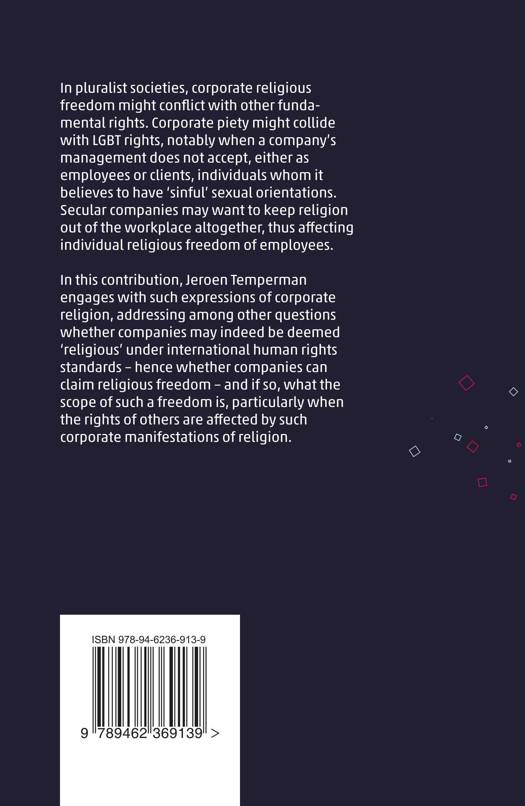
In pluralist societies, corporate religious freedom might confl ict with other fundamental rights. Corporate piety might collide with LGBT rights, notably when a company's management does not accept, either as em ployees or clients, individuals whom it believes to have 'sinful' sexual orientations. Secular companies may want to keep religion out of the workplace altogether, thus affecting individual religious freedom of employees. In this contribution, Jeroen Temperman engages with such expressions of corporate religion, addressing among other questions whether companies may indeed be deemed 'religious' under international human rights standards - hence whether companies can claim religious freedom - and if so, what the scope of such a freedom is, particularly when the rights of others are affected by such corporate manifestations of religion.
Specificaties
Betrokkenen
- Auteur(s):
- Uitgeverij:
Inhoud
- Aantal bladzijden:
- 66
- Taal:
- Engels
Eigenschappen
- Productcode (EAN):
- 9789462369139
- Verschijningsdatum:
- 25/02/2019
- Uitvoering:
- Paperback
- Formaat:
- Trade paperback (VS)
- Afmetingen:
- 140 mm x 216 mm
- Gewicht:
- 98 g



Alleen bij Standaard Boekhandel
+ 79 punten op je klantenkaart van Standaard Boekhandel
CADEAU

AANGERADEN


Beoordelingen
We publiceren alleen reviews die voldoen aan de voorwaarden voor reviews. Bekijk onze voorwaarden voor reviews.