


- Afhalen na 1 uur in een winkel met voorraad
- Gratis thuislevering in België vanaf € 30
- Ruim aanbod met 7 miljoen producten
- Afhalen na 1 uur in een winkel met voorraad
- Gratis thuislevering in België vanaf € 30
- Ruim aanbod met 7 miljoen producten





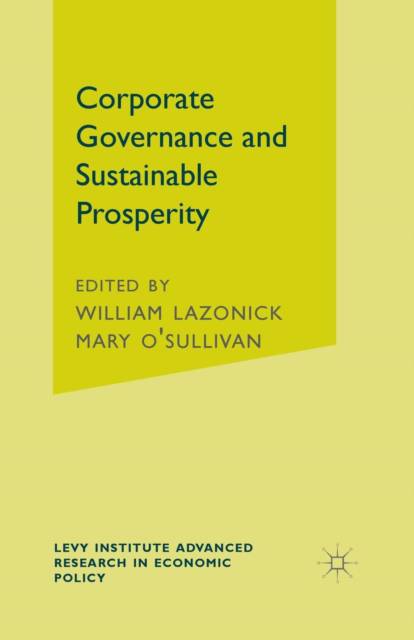
Corporate Governance and Sustainable Prosperity
€ 167,95
+ 335 punten
Omschrijving
How can we explain the persistent worsening of the income distribution in the United States in the 1980s and 1990s? What are the prospects for the re-emergence of sustainable prosperity in the US economy over the next generation? Situating these questions within a wider context through historical analysis and comparisons with Germany and Japan, this book focuses on the microeconomics of corporate investment behaviour, and the macroeconomics of household saving behaviour. Specifically, the contributors analyze how the combined pressures of excessive corporate growth, international competition, and intergenerational dependence have influenced corporate investment over the past two decades. They also offer a perspective on how corporate investment in skill bases can support sustainable prosperity, with studies drawn from the machine tool, aircraft engine, and medical equipment industries.
Specificaties
Betrokkenen
- Uitgeverij:
Inhoud
- Aantal bladzijden:
- 312
- Taal:
- Engels
- Reeks:
Eigenschappen
- Productcode (EAN):
- 9781349417421
- Verschijningsdatum:
- 14/11/2001
- Uitvoering:
- Paperback
- Formaat:
- Trade paperback (VS)
- Afmetingen:
- 140 mm x 216 mm
- Gewicht:
- 381 g

Alleen bij Standaard Boekhandel
+ 335 punten op je klantenkaart van Standaard Boekhandel
Cadeau

AANGERADEN


Beoordelingen
We publiceren alleen reviews die voldoen aan de voorwaarden voor reviews. Bekijk onze voorwaarden voor reviews.