


- Afhalen na 1 uur in een winkel met voorraad
- Gratis thuislevering in België vanaf € 30
- Ruim aanbod met 7 miljoen producten
- Afhalen na 1 uur in een winkel met voorraad
- Gratis thuislevering in België vanaf € 30
- Ruim aanbod met 7 miljoen producten





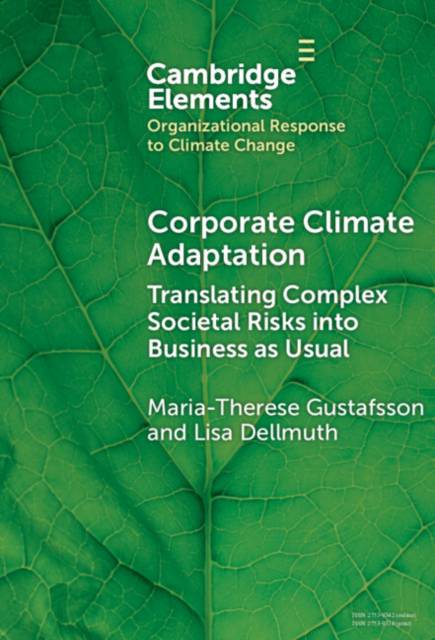
Corporate Climate Adaptation
Translating Complex Societal Risks Into Business as Usual
Maria-Therese Gustafsson, Lisa Dellmuth
€ 124,45
+ 248 punten
Uitvoering
Omschrijving
As private companies assume a growing role in climate adaptation, their strategies may harm society and ecosystems unless grounded in responsible business conduct. This Element offers a new perspective on responsible business conduct in climate adaptation, presenting a theoretical framework that explains how regulatory and political factors external to firms influence their consideration of societal needs when adapting to climate change. Using a novel quantitative and qualitative dataset, the Element shows that the world's largest mining companies have primarily addressed climate risks through conventional corporate social responsibility strategies rather than procedural components of responsible business conduct, such as risk assessments, participation, and transparency. The results suggest this outcome is best explained by a combination of weak governance, lax voluntary standards, and civil society advocacy. This title is also available as Open Access on Cambridge Core.
Specificaties
Betrokkenen
- Auteur(s):
- Uitgeverij:
Inhoud
- Aantal bladzijden:
- 88
- Taal:
- Engels
- Reeks:
Eigenschappen
- Productcode (EAN):
- 9781009780605
- Verschijningsdatum:
- 5/03/2026
- Uitvoering:
- Hardcover
- Formaat:
- Genaaid
- Afmetingen:
- 152 mm x 229 mm
- Gewicht:
- 290 g


Alleen bij Standaard Boekhandel
+ 248 punten op je klantenkaart van Standaard Boekhandel
Cadeau

AANGERADEN


Beoordelingen
We publiceren alleen reviews die voldoen aan de voorwaarden voor reviews. Bekijk onze voorwaarden voor reviews.