


- Afhalen na 1 uur in een winkel met voorraad
- Gratis thuislevering in België vanaf € 30
- Ruim aanbod met 7 miljoen producten
- Afhalen na 1 uur in een winkel met voorraad
- Gratis thuislevering in België vanaf € 30
- Ruim aanbod met 7 miljoen producten





€ 63,45
+ 126 punten
Omschrijving
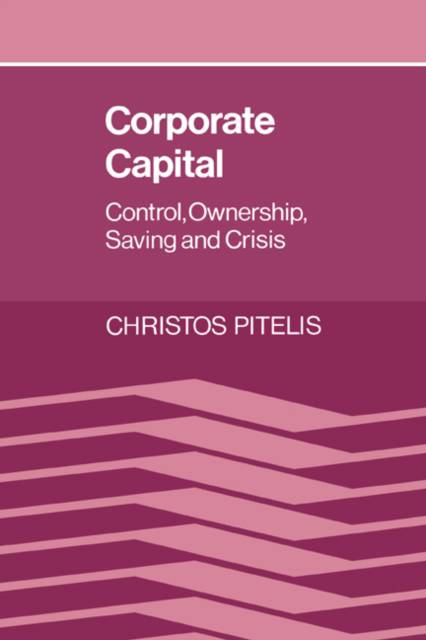
This book looks at the role of the modern corporation in advanced capitalist countries. In particular it considers corporate control and shareownership and the impact of these on consumers' choice, the mobilization of financial capital, the saving function, and the question of the potentially inherent tendency towards stagnation and crisis. The author suggests that there is a tendency towards social ownership of the means of production in modern capitalist economies, directly via share purchase and indirectly via, e.g., occupational pension funds, while at the same time control and appropriation remain vested in a small minority. This is shown to affect financial capital accumulation and the saving function, since the competition between giant corporations encourages their controllers to increase corporate saving above the level desired by small shareholders who are suggested to be unable fully to compensate for such increases by their actions.
Specificaties
Betrokkenen
- Auteur(s):
- Uitgeverij:
Inhoud
- Aantal bladzijden:
- 148
- Taal:
- Engels
Eigenschappen
- Productcode (EAN):
- 9780521607452
- Verschijningsdatum:
- 19/08/2004
- Uitvoering:
- Paperback
- Formaat:
- Trade paperback (VS)
- Afmetingen:
- 152 mm x 229 mm
- Gewicht:
- 226 g



Alleen bij Standaard Boekhandel
+ 126 punten op je klantenkaart van Standaard Boekhandel
Cadeau

AANGERADEN


Beoordelingen
We publiceren alleen reviews die voldoen aan de voorwaarden voor reviews. Bekijk onze voorwaarden voor reviews.