


- Afhalen na 1 uur in een winkel met voorraad
- Gratis thuislevering in België vanaf € 30
- Ruim aanbod met 7 miljoen producten
- Afhalen na 1 uur in een winkel met voorraad
- Gratis thuislevering in België vanaf € 30
- Ruim aanbod met 7 miljoen producten





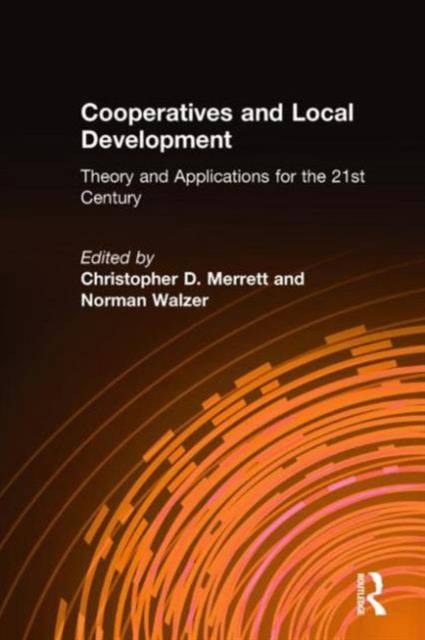
Cooperatives and Local Development
Theory and Applications for the 21st Century
Christopher D Merrett, Norman Walzer
Hardcover | Engels
€ 389,45
+ 778 punten
Uitvoering
Omschrijving
First Published in 2004. The market economy has changed profoundly over the past two centuries. In the nineteenth century, business enterprises were largely single-product ventures, managed directly by the owners and rooted within national economies. In the twentieth century, firms employed managers who were not owners. Firms also evolved into multiproduct, multiunit entities that could employ thousands of workers. In the twenty-first century, many firms operate on a global scale, taking advantage of free trade policies and rapidly evolving computer and telecommunications technologies. Given this potential, it is crucial that producers, consumers, economic developers, and researchers realize how co-ops can promote local economic and community development. Hence, this book includes the perceptions of experts on a variety of cooperative issues, including the challenges involved in starting a co-op and in understanding its impact on surrounding communities. This book can be especially useful because it provides the theoretical foundations and practical applications of cooperative behavior.
Specificaties
Betrokkenen
- Auteur(s):
- Uitgeverij:
Inhoud
- Aantal bladzijden:
- 344
- Taal:
- Engels
Eigenschappen
- Productcode (EAN):
- 9780765611239
- Verschijningsdatum:
- 31/08/2003
- Uitvoering:
- Hardcover
- Formaat:
- Genaaid
- Afmetingen:
- 152 mm x 241 mm
- Gewicht:
- 598 g



Alleen bij Standaard Boekhandel
+ 778 punten op je klantenkaart van Standaard Boekhandel
CADEAU

AANGERADEN


Beoordelingen
We publiceren alleen reviews die voldoen aan de voorwaarden voor reviews. Bekijk onze voorwaarden voor reviews.