



Bedankt voor het vertrouwen het afgelopen jaar! Om jou te bedanken bieden we GRATIS verzending (in België) aan op alles gedurende de hele maand januari.
- Afhalen na 1 uur in een winkel met voorraad
- In januari gratis thuislevering in België
- Ruim aanbod met 7 miljoen producten
Bedankt voor het vertrouwen het afgelopen jaar! Om jou te bedanken bieden we GRATIS verzending (in België) aan op alles gedurende de hele maand januari.
- Afhalen na 1 uur in een winkel met voorraad
- In januari gratis thuislevering in België
- Ruim aanbod met 7 miljoen producten





€ 98,45
+ 196 punten
Omschrijving
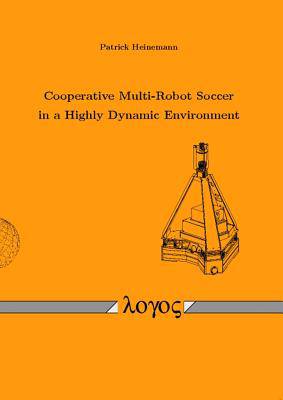
The number of robots applied to different jobs in our society has steadily increased over the past years. While industrial robots welding and varnishing our cars are quite common these days, the future generation of robots will enter our everyday life. In contrast to industrial robots working in special evacuated areas for security reasons, these mobile service robots will have to move among and interact with humans, imposing new challenges on the software of the robots. Only the application of sensors to observe the environment and the subsequent use of intelligent data processing algorithms will enable the robots to avoid collisions with moving obstacles, to get information on their current locations, to perform goal oriented tasks and to cooperate with humans as well as other robots. This thesis addresses these new challenges by describing the development of a team of robots that is able to exhibit intelligent behavior, competitive as well as cooperative, while moving in a highly dynamic environment, as a first step towards a new kind of mobile robots. To evaluate and compare the results of the development, robotic soccer (RoboCup) was chosen as testbed for the robot team. Many of the challenges imposed by the RoboCup environment are similar to those found in real-life applications. Robots in RoboCup have to localize themselves, gather information on their environment, including the position and also the velocity of potential obstacles, deal with varying lighting scenarios, as well as competing and cooperating with other robots. Firstly, the thesis presents the decisions made concerning the co-design of the robot hardware and software. Here, the selection of an omni-directional drive mechanism and a vision sensor with a high frame rate, the software framework designed to be flexible and expandable, as well as the development of a common and simple control interface are the key points in the system design. The main part of the thesis, however, presents the efficient algorithms implemented for image processing, environment modeling, and high-level control. As the only sensor of the robots is an omni-directional vision system that is able to map the complete surrounding of the robot, the performance of the robot system depends on the image processing algorithms and requires a high accuracy and a low processing time. The presented image processing algorithms fulfill both requirements proven by extensive experimental results. Besides landmark and object extraction these algorithms also include new techniques for automatic camera calibration. The environment modeling contains a new combined Monte-Carlo localization and tracking algorithm that is competitive with the best performing algorithms concerning the accuracy and the computation time at the same time, again proven by extensive experimental results. Finally, the high-level robot control component exhibits efficient movement through highly dynamic environments and successful competitive and cooperative behavior. The thesis concludes with an analysis of the team's RoboCup competition results as a final verification of the good performance of the developed system.
Specificaties
Betrokkenen
- Auteur(s):
- Uitgeverij:
Inhoud
- Aantal bladzijden:
- 203
- Taal:
- Engels
Eigenschappen
- Productcode (EAN):
- 9783832517786
- Verschijningsdatum:
- 31/12/2007
- Uitvoering:
- Paperback
- Formaat:
- Trade paperback (VS)
- Afmetingen:
- 145 mm x 211 mm
- Gewicht:
- 284 g


Alleen bij Standaard Boekhandel
+ 196 punten op je klantenkaart van Standaard Boekhandel
SOLDEN


Beoordelingen
We publiceren alleen reviews die voldoen aan de voorwaarden voor reviews. Bekijk onze voorwaarden voor reviews.