


- Afhalen na 1 uur in een winkel met voorraad
- Gratis thuislevering in België vanaf € 30
- Ruim aanbod met 7 miljoen producten
- Afhalen na 1 uur in een winkel met voorraad
- Gratis thuislevering in België vanaf € 30
- Ruim aanbod met 7 miljoen producten





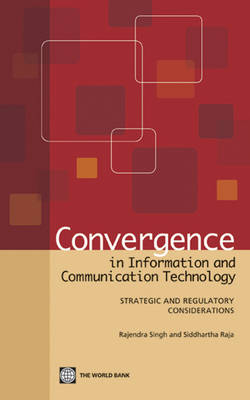
Convergence in Information and Communication Technology
Strategic and Regulatory Considerations
Rajendra Singh, Siddhartha Raja
Paperback | Engels
€ 25,45
+ 50 punten
Omschrijving
Growth in the information and technology (ICT) sector has exploded over the past 20 years. Dynamic market and technology developments have led to a phenomenon known as convergence, defined in this volume as the erosion of boundaries between previously separate ICT services, networks, and business practices. Examples include cable television networks that offer phone service, Internet television, and mergers between media and telecommunications firms. The results are exciting and hold significant promise for developing countries, which can benefit from expanded access, greater competition, and increased investments. However, convergence in ICT is challenging traditional policy and regulatory frameworks. With convergence occurring in countries across the spectrum of economic development, it is critical that policy makers and regulators understand it and respond in ways that maximize the benefits while mitigating the risks. This volume analyzes the strategic and regulatory dimensions of convergence. It offers policy makers and regulators examples from countries around the world as they address this phenomenon. The authors suggest that countries that enable convergence are likely to reap the greater rewards. But the precise nature of the response will differ by country. Hence, this book offers global principles that should be tailored to local circumstances as regulatory frameworks evolve to address convergence.
Specificaties
Betrokkenen
- Auteur(s):
- Uitgeverij:
Inhoud
- Aantal bladzijden:
- 140
- Taal:
- Engels
Eigenschappen
- Productcode (EAN):
- 9780821381694
- Verschijningsdatum:
- 23/02/2010
- Uitvoering:
- Paperback
- Formaat:
- Trade paperback (VS)
- Afmetingen:
- 124 mm x 198 mm
- Gewicht:
- 204 g


Alleen bij Standaard Boekhandel
+ 50 punten op je klantenkaart van Standaard Boekhandel
Cadeau

AANGERADEN


Beoordelingen
We publiceren alleen reviews die voldoen aan de voorwaarden voor reviews. Bekijk onze voorwaarden voor reviews.