


- Afhalen na 1 uur in een winkel met voorraad
- Gratis thuislevering in België vanaf € 30
- Ruim aanbod met 7 miljoen producten
- Afhalen na 1 uur in een winkel met voorraad
- Gratis thuislevering in België vanaf € 30
- Ruim aanbod met 7 miljoen producten





€ 100,70
+ 201 punten
Omschrijving
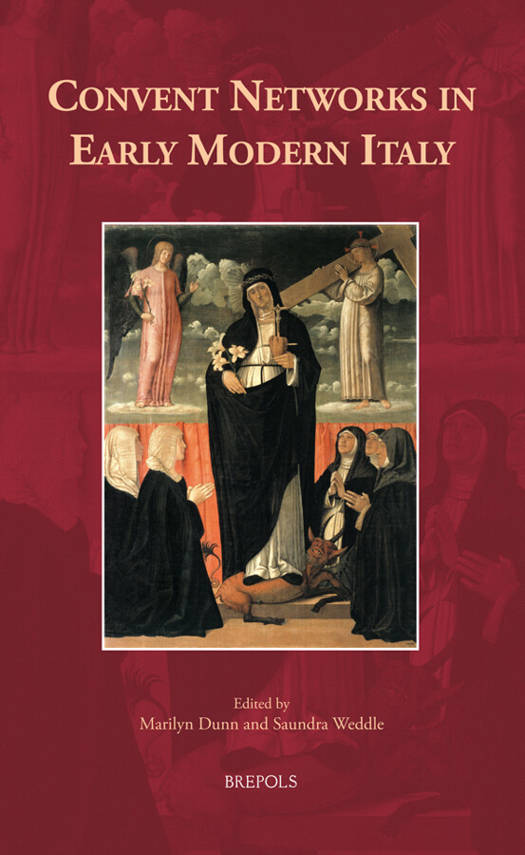
The walls of early modern convents suggested the existence of absolute conditions that seldom existed in reality. While the built enclosure communicated the convent's isolation from the world outside, connections between women religious and individuals or groups outside their communities extended into and from these houses, with each constituency exploiting these associations to serve its own aims. Likewise, the walls conveyed the presence of a homogeneous and unified community where, often, differences in status, power, and other interests led to the development of internal alliances and factions. Building on an upsurge of scholarly interest in convent networks that previously has not been focused in a single volume, this collection of interdisciplinary essays examines how and why such associations existed. The collection examines personal, spatial, and temporal networks that emerged in, among, and beyond convents in Italy during the early modern period. These ties were established, cultivated, or even rejected in a variety of ways that influenced nuns' devotional lives, their relationships with patrons, and their cultural engagement and production. These essays cover the time period before and after the Council of Trent, permitting an analysis of convents' responses to changing power dynamics, both inside and outside the enclosure. The book also engages a broad geographical and cultural range, with chapters focusing on the centres of Florence, Venice, and Rome, the courts of Urbino, Ferrara, and Mantua, and smaller cities across Northern Italy, offering unprecedented insights into early modern Italian convent life and its varied forms and modes of expression.
Specificaties
Betrokkenen
- Auteur(s):
- Uitgeverij:
Inhoud
- Aantal bladzijden:
- 325
- Taal:
- Engels
- Reeks:
- Reeksnummer:
- nr. 25
Eigenschappen
- Productcode (EAN):
- 9782503586076
- Verschijningsdatum:
- 1/10/2020
- Uitvoering:
- Hardcover
- Formaat:
- Genaaid
- Afmetingen:
- 160 mm x 239 mm
- Gewicht:
- 725 g


Alleen bij Standaard Boekhandel
+ 201 punten op je klantenkaart van Standaard Boekhandel
Cadeau

AANGERADEN


Beoordelingen
We publiceren alleen reviews die voldoen aan de voorwaarden voor reviews. Bekijk onze voorwaarden voor reviews.