


- Afhalen na 1 uur in een winkel met voorraad
- Gratis thuislevering in België vanaf € 30
- Ruim aanbod met 7 miljoen producten
- Afhalen na 1 uur in een winkel met voorraad
- Gratis thuislevering in België vanaf € 30
- Ruim aanbod met 7 miljoen producten





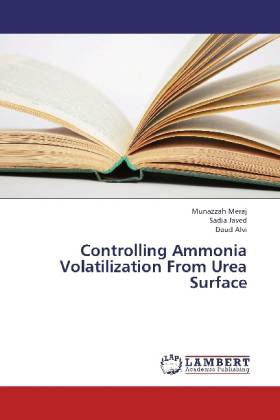
Controlling Ammonia Volatilization From Urea Surface
Munazzah Meraj, Sadia Javed, Daud Alvi
Paperback | Engels
€ 48,45
+ 96 punten
Omschrijving
Fertilizer consumption has increased three fold during the past 30 years. It reached one million nutrient tones in 1980/81, two million tons in 1992/93 and three million tons in 2002/03. Urea, today, is made in approximately 75 factories worldwide with a total capacity approaching 100,000,000 tons annually. Urea hydrolyzed by urease. Sodium Thiosulfate (ST) has been reported to inhibit nitrification and urea hydrolysis and thereby reduces volatilization of urea nitrogen as ammonia from soils fertilized with urea. A laboratory experiment was carried out by adding ST to urea (10 % by volume). We evaluated ST as a soil urease inhibitor by studying its effects on urea hydrolysis. Encouraging results were found in reducing NH3 losses when ST was applied it reduced NH3 losses in cotton 35.13%, 31.65% and 35.35%, 32.77% in Rice soils in first and second experiment respectively. It functions as urease and nitrification inhibitor.
Specificaties
Betrokkenen
- Auteur(s):
- Uitgeverij:
Inhoud
- Aantal bladzijden:
- 72
- Taal:
- Engels
Eigenschappen
- Productcode (EAN):
- 9783659315466
- Verschijningsdatum:
- 29/12/2012
- Uitvoering:
- Paperback
- Afmetingen:
- 150 mm x 220 mm
- Gewicht:
- 118 g


Alleen bij Standaard Boekhandel
+ 96 punten op je klantenkaart van Standaard Boekhandel
Cadeau

AANGERADEN


Beoordelingen
We publiceren alleen reviews die voldoen aan de voorwaarden voor reviews. Bekijk onze voorwaarden voor reviews.