


- Afhalen na 1 uur in een winkel met voorraad
- Gratis thuislevering in België vanaf € 30
- Ruim aanbod met 7 miljoen producten
- Afhalen na 1 uur in een winkel met voorraad
- Gratis thuislevering in België vanaf € 30
- Ruim aanbod met 7 miljoen producten





€ 38,45
+ 76 punten
Omschrijving
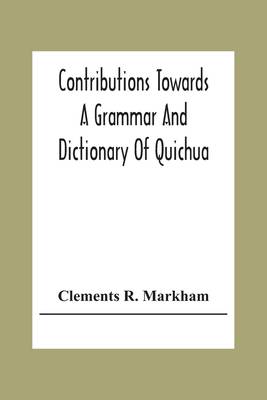
An essential, lucid record of Quichua, captured with nineteenth-century care. Words that survive across centuries. Part grammar, part lexicon, Contributions Towards A Grammar And Dictionary Of Quichua presents a methodical indigenous language grammar alongside a practical quichua language dictionary: concise grammatical sketches, systematic entries and a quichua vocabulary study that illuminates structure and usage. Designed for clarity, its explanations and examples favour precision over ornament; the organisation helps both newcomers and seasoned students grasp inflectional patterns and common usages. The tone is measured and observant, so the work stands as both a language learners resource and a readable piece of linguistic history. Produced in the era of nineteenth century linguistics, R. Markham Clements' contribution is a primary witness to Ecuadorian language history and an early node in South American linguistics. As an andean languages reference and comparative linguistics guide it aids scholars tracing cognates, morphology and regional variation across native american languages, and its value endures in historical language studies and within any academic linguistics collection. The vocabulary and grammatical notes offer a lively snapshot useful for comparative work among Quichua varieties and for anyone examining language contact in Andean communities. Modern researchers and field linguists alike can mine its pages for evidence of lexical retention, semantic shift and contact phenomena; teachers and self-directed learners will find anchoring examples for classroom work or independent study. Its place within an academic linguistics collection is secure: it complements contemporary fieldwork and shows how nineteenth-century scholars approached indigenous language description. Casual readers who enjoy linguistic discovery or cultural history will find approachable explanation and fascinating lexical detail; classic-literature collectors and specialist libraries will prize its authenticity and the rare perspective it preserves. Republished by Alpha Editions in a careful modern edition, this volume preserves the spirit of the original while making it effortless to enjoy today - a heritage title prepared for readers and collectors alike.
Specificaties
Betrokkenen
- Auteur(s):
- Uitgeverij:
Inhoud
- Aantal bladzijden:
- 260
- Taal:
- Engels
Eigenschappen
- Productcode (EAN):
- 9789354307980
- Verschijningsdatum:
- 15/12/2020
- Uitvoering:
- Paperback
- Formaat:
- Trade paperback (VS)
- Afmetingen:
- 152 mm x 229 mm
- Gewicht:
- 385 g


Alleen bij Standaard Boekhandel
+ 76 punten op je klantenkaart van Standaard Boekhandel
Cadeau

AANGERADEN


Beoordelingen
We publiceren alleen reviews die voldoen aan de voorwaarden voor reviews. Bekijk onze voorwaarden voor reviews.