


- Afhalen na 1 uur in een winkel met voorraad
- Gratis thuislevering in België vanaf € 30
- Ruim aanbod met 7 miljoen producten
- Afhalen na 1 uur in een winkel met voorraad
- Gratis thuislevering in België vanaf € 30
- Ruim aanbod met 7 miljoen producten





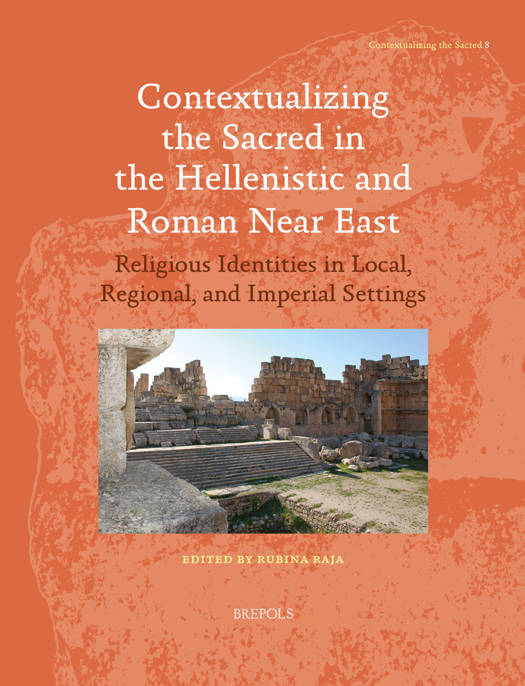
Contextualizing the Sacred in the Hellenistic and Roman Near East
Religious Identities in Local, Regional, and Imperial Settings
Rubina Raja
€ 137,80
+ 275 punten
Omschrijving
The study of religion and religious identities in the Hellenistic and Roman Near East has been a focus within archaeology and ancient history for centuries. Yet the transition between the Hellenistic and Roman period remains difficult to grasp from the archaeological and epigraphic evidence. This volume brings together contributions by leading scholars working on religious identity and religion in the Hellenistic and Roman periods in the Roman Near East. For this volume they have been asked to address a variety of questions concerning religion, religious development, and religious identities from the Hellenistic period to Late Antiquity. These research questions have resulted in a suite of contributions which draw upon a wide range of empirical evidence, from epigraphical material to literary and archaeological sources. In the ancient Near East we cannot speak of a common religion, nor of a common literary tradition, but when seen through the lens of contextualization, the material and textual evidence brings forward new narratives about the great variations in worship, myths, and identities, as well as the different religious systems of the region and of the people inhabiting it. The contributions offer concretized ideas about and research on various aspects of religion within a framework of very different settings, of local, regional, or imperial character. This volume is a must for any scholar or student of the Hellenistic, Roman, and Late Roman Near East, and the contributions provide new insights into the ways in which we may approach this region, offering complex but plentiful material to be studied.
Specificaties
Betrokkenen
- Auteur(s):
- Uitgeverij:
Inhoud
- Aantal bladzijden:
- 256
- Taal:
- Engels
- Reeks:
- Reeksnummer:
- nr. 8
Eigenschappen
- Productcode (EAN):
- 9782503569635
- Verschijningsdatum:
- 30/09/2017
- Uitvoering:
- Paperback
- Formaat:
- Trade paperback (VS)
- Afmetingen:
- 213 mm x 277 mm
- Gewicht:
- 1202 g


Alleen bij Standaard Boekhandel
+ 275 punten op je klantenkaart van Standaard Boekhandel
Cadeau

AANGERADEN


Beoordelingen
We publiceren alleen reviews die voldoen aan de voorwaarden voor reviews. Bekijk onze voorwaarden voor reviews.