


- Afhalen na 1 uur in een winkel met voorraad
- Gratis thuislevering in België vanaf € 30
- Ruim aanbod met 7 miljoen producten
- Afhalen na 1 uur in een winkel met voorraad
- Gratis thuislevering in België vanaf € 30
- Ruim aanbod met 7 miljoen producten





€ 36,45
+ 72 punten
Uitvoering
Omschrijving
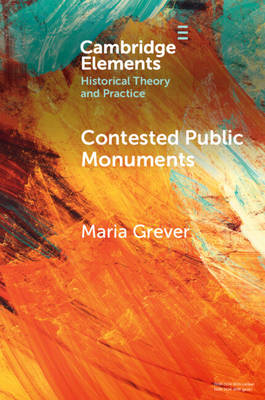
In the new millennium, many public monuments around the world have become the target of protests as part of social movements' struggles against inequality and discrimination. Despite research into the significance of toppled statues or damaged monuments and the motives of activists, little attention has been paid to the extent to which iconoclastic activism changes the narratives of public spaces or landscapes of memory. This Element approaches current conflicts over public monuments as an attempt to transform the mnemonic regime of public spaces. It examines global cases involving colonialism, Black slavery, world wars, and women's oppression. Using theoretical concepts, such as monumental narrativity, necropolitical space, white innocence, and the implicated subject, four current contexts of contestations will be highlighted: the fabric of landscapes of memory; the relationship between the living and the dead of a community; the power of visual language, iconography, and multiplication; the importance of dialogical monuments.
Specificaties
Betrokkenen
- Auteur(s):
- Uitgeverij:
Inhoud
- Aantal bladzijden:
- 98
- Taal:
- Engels
- Reeks:
Eigenschappen
- Productcode (EAN):
- 9781009515719
- Verschijningsdatum:
- 13/11/2025
- Uitvoering:
- Paperback
- Formaat:
- Trade paperback (VS)
- Afmetingen:
- 152 mm x 229 mm
- Gewicht:
- 140 g


Alleen bij Standaard Boekhandel
+ 72 punten op je klantenkaart van Standaard Boekhandel
Cadeau

AANGERADEN


Beoordelingen
We publiceren alleen reviews die voldoen aan de voorwaarden voor reviews. Bekijk onze voorwaarden voor reviews.