


- Afhalen na 1 uur in een winkel met voorraad
- Gratis thuislevering in België vanaf € 30
- Ruim aanbod met 7 miljoen producten
- Afhalen na 1 uur in een winkel met voorraad
- Gratis thuislevering in België vanaf € 30
- Ruim aanbod met 7 miljoen producten





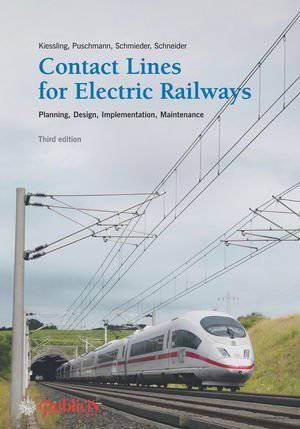
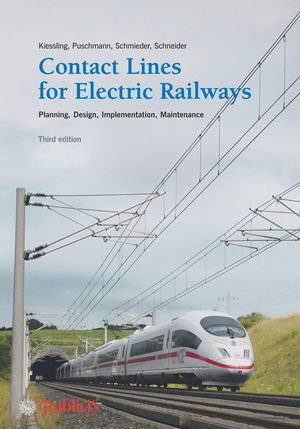
Contact Lines for Electrical Railways
Planning - Design - Implementation - Maintenance
Friedrich Kiessling, Rainer Puschmann, Axel Schmieder, Egid Schneider
Hardcover | Engels
€ 145,20
+ 290 punten
Omschrijving
Electric traction is the most favourable type of power supply for electric railways from both an ecological and an economic perspective. In the case of urban mass transit and high-speed trains it is the only possible type of traction. Its reliability largely depends on contact lines, which must operate in all climatic conditions with as high availability and as little maintenance as possible. Extreme demands arise when overhead contact lines are required to provide reliable and safe power transmission to traction vehicles travelling at speeds in excess of 250 km/h.
The authors have used their worldwide experience to provide comprehensive descriptions of configuration, mechanical and electrical design, installation, operation and maintenance of contact lines for local and long-distance transportation systems, including high-speed lines.
In this book, railway company professionals and manufacturers of contact line systems, students and those embarking on a career in this field will find practical guidance in the planning and implementation of systems, product descriptions, specifications and technical data, including standards and other regulations. Special emphasis is laid on the interaction of the individual components of power supply, especially between contact lines and pantographs. Since large sections of the book are dedicated to system aspects, consultant engineers can also use it as a basis for designing systems as well as interfaces to other subsystems of electric railway engineering. The contents of the book are rounded off by examples of running systems.
The authors have used their worldwide experience to provide comprehensive descriptions of configuration, mechanical and electrical design, installation, operation and maintenance of contact lines for local and long-distance transportation systems, including high-speed lines.
In this book, railway company professionals and manufacturers of contact line systems, students and those embarking on a career in this field will find practical guidance in the planning and implementation of systems, product descriptions, specifications and technical data, including standards and other regulations. Special emphasis is laid on the interaction of the individual components of power supply, especially between contact lines and pantographs. Since large sections of the book are dedicated to system aspects, consultant engineers can also use it as a basis for designing systems as well as interfaces to other subsystems of electric railway engineering. The contents of the book are rounded off by examples of running systems.
Specificaties
Betrokkenen
- Auteur(s):
- Uitgeverij:
Inhoud
- Aantal bladzijden:
- 1104
- Taal:
- Engels
Eigenschappen
- Productcode (EAN):
- 9783895784200
- Verschijningsdatum:
- 19/12/2017
- Uitvoering:
- Hardcover
- Afmetingen:
- 177 mm x 250 mm
- Gewicht:
- 2243 g


Alleen bij Standaard Boekhandel
+ 290 punten op je klantenkaart van Standaard Boekhandel
Wedstrijd


Beoordelingen
We publiceren alleen reviews die voldoen aan de voorwaarden voor reviews. Bekijk onze voorwaarden voor reviews.