


- Afhalen na 1 uur in een winkel met voorraad
- Gratis thuislevering in België vanaf € 30
- Ruim aanbod met 7 miljoen producten
- Afhalen na 1 uur in een winkel met voorraad
- Gratis thuislevering in België vanaf € 30
- Ruim aanbod met 7 miljoen producten




€ 112,95
+ 225 punten
Uitvoering
Omschrijving
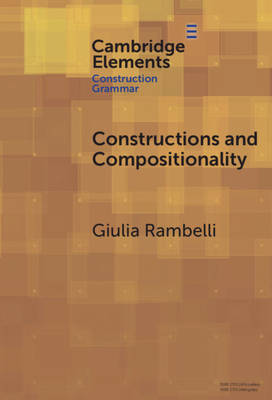
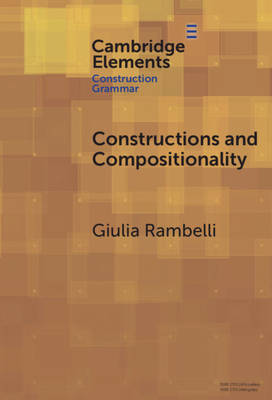
How do we understand any sentence, from the most ordinary to the most creative? The traditional assumption is that we rely on formal rules combining words (compositionality). However, psycho- and neuro-linguistic studies point to a linguistic representation model that aligns with the assumptions of Construction Grammar: there is no sharp boundary between stored sequences and productive patterns. Evidence suggests that interpretation alternates compositional (incremental) and noncompositional (global) strategies. Accordingly, systematic processes of language productivity are explainable by analogical inferences rather than compositional operations: novel expressions are understood 'on the fly' by analogy with familiar ones. This Element discusses compositionality, alternative mechanisms in language processing, and explains why Construction Grammar is the most suitable approach for formalizing language comprehension.
Specificaties
Betrokkenen
- Auteur(s):
- Uitgeverij:
Inhoud
- Aantal bladzijden:
- 102
- Taal:
- Engels
- Reeks:
Eigenschappen
- Productcode (EAN):
- 9781009517393
- Verschijningsdatum:
- 30/01/2025
- Uitvoering:
- Hardcover
- Formaat:
- Genaaid
- Afmetingen:
- 152 mm x 229 mm
- Gewicht:
- 308 g


Alleen bij Standaard Boekhandel
+ 225 punten op je klantenkaart van Standaard Boekhandel
AANGERADEN


Beoordelingen
We publiceren alleen reviews die voldoen aan de voorwaarden voor reviews. Bekijk onze voorwaarden voor reviews.