


- Afhalen na 1 uur in een winkel met voorraad
- Gratis thuislevering in België vanaf € 30
- Ruim aanbod met 7 miljoen producten
- Afhalen na 1 uur in een winkel met voorraad
- Gratis thuislevering in België vanaf € 30
- Ruim aanbod met 7 miljoen producten





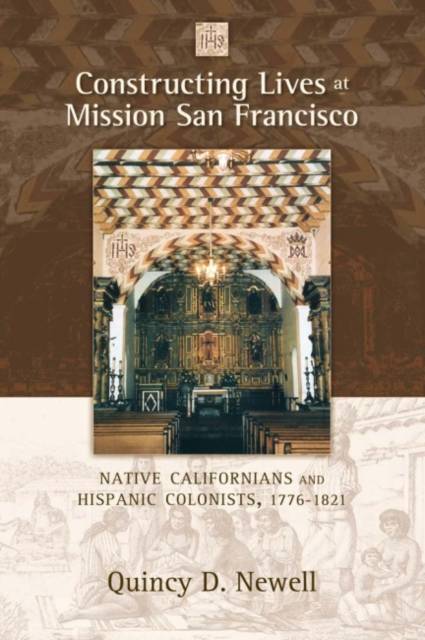
Constructing Lives at Mission San Francisco
Native Californians and Hispanic Colonists, 1776-1821
Quincy D Newell
Paperback | Engels
€ 46,45
+ 92 punten
Omschrijving
Located at the tip of the San Francisco peninsula in the heart of what is now the city's Mission District, the Mission of San Francisco de Asís, established in 1776, was the sixth to be founded in the Alta California mission system. Northern California was home to many small tribal communities when the Franciscans began developing missions in the area in 1769. While no firsthand written accounts exist of Bay Area Indians' experiences at Mission San Francisco, there is evidence that, just as Hispanic colonists introduced Hispanic cultural customs to California, Bay Area Indians retained their own cultural traditions as they entered the missions. In this finely crafted study Quincy Newell examines the complexity of cultural contact between Franciscans and the native populations at Mission San Francisco. Records of traditional rituals and lifeways taking place alongside introduced doctrines and practices reveal the various ways California Indians adopted, adapted, and rejected aspects of mission life. Using baptismal, marriage, and death records to tell the history of these colonized peoples, Newell demonstrates that the priests' conversion and Hispanicization of the Bay Area Indians remained partial at best.
Specificaties
Betrokkenen
- Auteur(s):
- Uitgeverij:
Inhoud
- Aantal bladzijden:
- 277
- Taal:
- Engels
Eigenschappen
- Productcode (EAN):
- 9780826347077
- Verschijningsdatum:
- 01/04/2011
- Uitvoering:
- Paperback
- Formaat:
- Trade paperback (VS)
- Afmetingen:
- 150 mm x 226 mm
- Gewicht:
- 385 g



Alleen bij Standaard Boekhandel
+ 92 punten op je klantenkaart van Standaard Boekhandel
Cadeau

AANGERADEN


Beoordelingen
We publiceren alleen reviews die voldoen aan de voorwaarden voor reviews. Bekijk onze voorwaarden voor reviews.