


- Afhalen na 1 uur in een winkel met voorraad
- Gratis thuislevering in België vanaf € 30
- Ruim aanbod met 7 miljoen producten
- Afhalen na 1 uur in een winkel met voorraad
- Gratis thuislevering in België vanaf € 30
- Ruim aanbod met 7 miljoen producten





€ 124,45
+ 248 punten
Uitvoering
Omschrijving
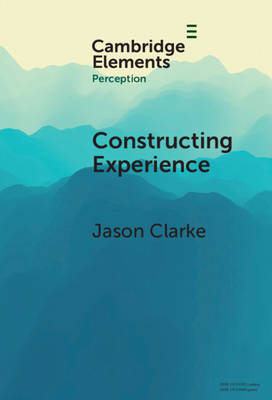
This Element examines the influence of expectation and attention on conscious perception. It explores the debate on whether attention is necessary for conscious perception by presenting empirical evidence from studies on inattentional blindness, change blindness, and the attentional blink. While the evidence strongly suggests that attention is necessary for conscious perception, other research has shown that expectation can shape perception, sometimes leading to illusory experiences where predicted stimuli are perceived despite their absence. This phenomenon, termed 'expectation awareness', suggests that attention may not be necessary for all conscious experiences. These findings are explored within the predictive processing framework, where the brain is characterized as a prediction engine, continuously updating its internal models to minimize prediction errors. Integrating findings from psychology, neuroscience, and cognitive science, this Element provides a predictive processing model of how attention and expectation construct perceptual reality. It also discusses clinical and theoretical implications and suggests future research.
Specificaties
Betrokkenen
- Auteur(s):
- Uitgeverij:
Inhoud
- Aantal bladzijden:
- 90
- Taal:
- Engels
- Reeks:
Eigenschappen
- Productcode (EAN):
- 9781009588560
- Verschijningsdatum:
- 30/01/2025
- Uitvoering:
- Hardcover
- Formaat:
- Genaaid
- Afmetingen:
- 152 mm x 229 mm
- Gewicht:
- 290 g


Alleen bij Standaard Boekhandel
+ 248 punten op je klantenkaart van Standaard Boekhandel
Cadeau

AANGERADEN


Beoordelingen
We publiceren alleen reviews die voldoen aan de voorwaarden voor reviews. Bekijk onze voorwaarden voor reviews.