


- Afhalen na 1 uur in een winkel met voorraad
- Gratis thuislevering in België vanaf € 30
- Ruim aanbod met 7 miljoen producten
- Afhalen na 1 uur in een winkel met voorraad
- Gratis thuislevering in België vanaf € 30
- Ruim aanbod met 7 miljoen producten





€ 57,95
+ 115 punten
Omschrijving
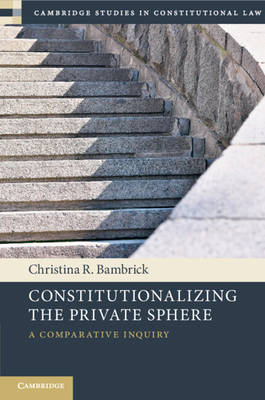
Do private actors have constitutional duties? While traditionally only government actors are responsible for upholding constitutional rights, courts and constitution-makers increasingly do assign constitutional duties to private actors as well. Therefore, a landlord may have constitutional duties to their tenants, and a sports club may even have duties to its fans. This book argues that this phenomenon of applying rights 'horizontally' can be understood through the lens of republican political theory. Themes echoing such concepts as the common good and civic duty from republican thought recur in discourses surrounding horizontal application. Bambrick traces republican themes in debates from the United States, India, Germany, South Africa, and the European Union. While these contexts have vastly different histories and aspirations, constitutional actors in each place have considered the horizontal application of rights and, in doing so, have made republican arguments. This title is also available as open access on Cambridge Core.
Specificaties
Betrokkenen
- Auteur(s):
- Uitgeverij:
Inhoud
- Aantal bladzijden:
- 320
- Taal:
- Engels
- Reeks:
Eigenschappen
- Productcode (EAN):
- 9781009293709
- Verschijningsdatum:
- 08/01/2026
- Uitvoering:
- Paperback
- Formaat:
- Trade paperback (VS)
- Afmetingen:
- 152 mm x 229 mm
- Gewicht:
- 430 g


Alleen bij Standaard Boekhandel
+ 115 punten op je klantenkaart van Standaard Boekhandel
Cadeau

AANGERADEN


Beoordelingen
We publiceren alleen reviews die voldoen aan de voorwaarden voor reviews. Bekijk onze voorwaarden voor reviews.