


- Afhalen na 1 uur in een winkel met voorraad
- Gratis thuislevering in België vanaf € 30
- Ruim aanbod met 7 miljoen producten
- Afhalen na 1 uur in een winkel met voorraad
- Gratis thuislevering in België vanaf € 30
- Ruim aanbod met 7 miljoen producten





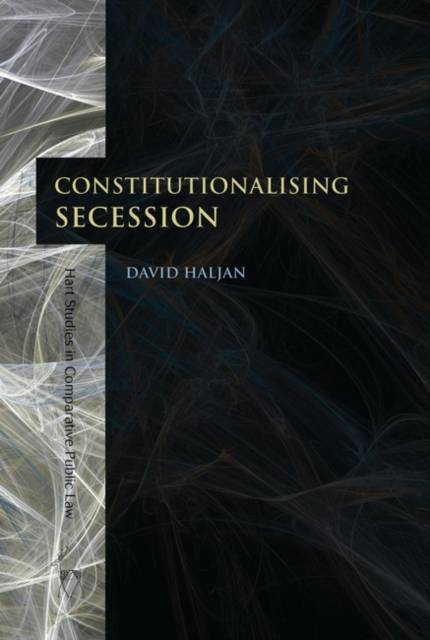
Constitutionalising Secession
David Haljan
€ 145,45
+ 290 punten
Omschrijving
Constitutionalising Secession proceeds from the question, 'What, if anything, does the law have to say about a secession crisis?' But rather than approaching secession through the optic of political or nationalist institutional accommodation, this book focuses on the underpinnings to a constitutional order as a law-making community, underpinnings laid bare by secession pressures. Relying on the corrosive effects of secession, it explores the deep structure of a constitutional order and the motive forces creating and sustaining that order. A core idea is that the normativity of law is best understood, through a constitutional optic, as an integrative, associative force. Constitutionalising Secession critically analyses conceptions of constitutional order implicit in the leading models of secession, and takes as a leading case-study the judicial and legislative response to secession in Canada. The book therefore develops a concept of constitutionalism and law-making - 'associative constitutionalism' - to describe their deep structure as a continuing, integrative process of association. This model of a dynamic process of value formation can address both the association and the disassociation of constitutional systems.
Specificaties
Betrokkenen
- Auteur(s):
- Uitgeverij:
Inhoud
- Aantal bladzijden:
- 448
- Taal:
- Engels
- Reeks:
- Reeksnummer:
- nr. 4
Eigenschappen
- Productcode (EAN):
- 9781849464376
- Verschijningsdatum:
- 25/02/2014
- Uitvoering:
- Hardcover
- Formaat:
- Genaaid
- Afmetingen:
- 180 mm x 246 mm
- Gewicht:
- 907 g


Alleen bij Standaard Boekhandel
+ 290 punten op je klantenkaart van Standaard Boekhandel
CADEAU

AANGERADEN


Beoordelingen
We publiceren alleen reviews die voldoen aan de voorwaarden voor reviews. Bekijk onze voorwaarden voor reviews.