


- Afhalen na 1 uur in een winkel met voorraad
- Gratis thuislevering in België vanaf € 30
- Ruim aanbod met 7 miljoen producten
- Afhalen na 1 uur in een winkel met voorraad
- Gratis thuislevering in België vanaf € 30
- Ruim aanbod met 7 miljoen producten





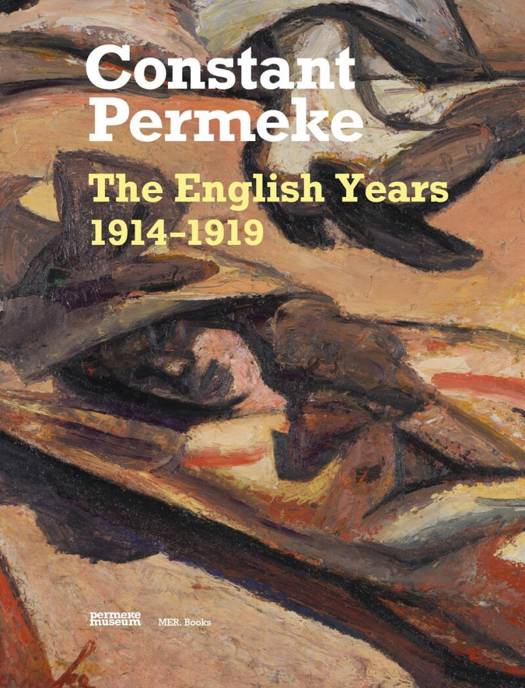
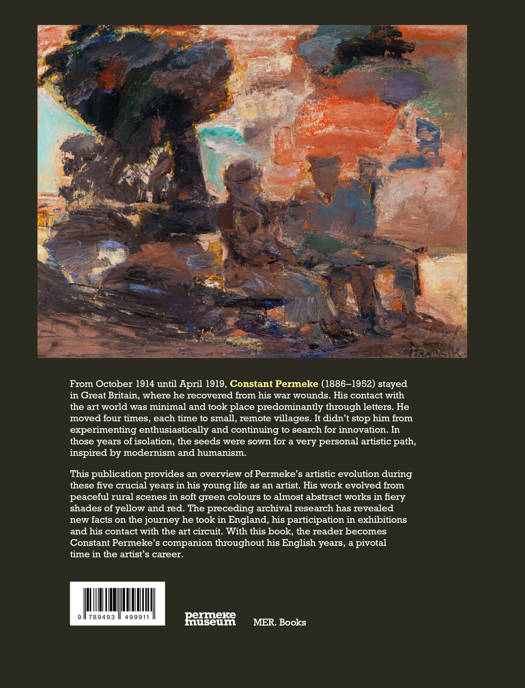
Constant Permeke, the English Years 1914-1919
Jan Ceuleers, Christophe De Clercq, Inne Gheeraert, Ludo Beheydt, René Vermeir
Paperback | Engels
€ 29,00
+ 58 punten
Omschrijving
Constant Permeke’s artistic trajectory was developing very promisingly — until the war disrupted everything. In July 1914, Belgium announced a general mobilization. Constant Permeke was called up as a soldier and took part in the defense of the Antwerp fortress ring in August. He was severely wounded in the leg by a shell splinter. The war was over for Permeke. Even before the fall of Antwerp on 9 October, all wounded soldiers were transferred from Antwerp to Ostend and then on to England. His heavily pregnant wife and his mother traveled after him.
From October 1914 to April 1919, Permeke stayed in England. He moved four times, each time to small, remote villages. This did not stop him from driven experimentation and seeking innovation. He mostly painted in large formats with oil on canvas, applying the paint thickly and roughly with brush and palette knife. The color palette is strikingly intense. Combined with the rough brushwork and unusual framing, it gives the paintings a very distinctive character. In these years of isolation, the seeds were planted for a highly personal artistic path, inspired by modernism and humanism.
The exhibition and the book aim to provide an overview of the artistic evolution Permeke underwent during those five crucial years in his young life as an artist. It also presents work by fellow countrymen who likewise stayed in England during the First World War — such as Edgard Tytgat, George Minne, Léon de Smet, and Gustave Van de Woestijne — whose works also appear in the exhibition and the book.
From October 1914 to April 1919, Permeke stayed in England. He moved four times, each time to small, remote villages. This did not stop him from driven experimentation and seeking innovation. He mostly painted in large formats with oil on canvas, applying the paint thickly and roughly with brush and palette knife. The color palette is strikingly intense. Combined with the rough brushwork and unusual framing, it gives the paintings a very distinctive character. In these years of isolation, the seeds were planted for a highly personal artistic path, inspired by modernism and humanism.
The exhibition and the book aim to provide an overview of the artistic evolution Permeke underwent during those five crucial years in his young life as an artist. It also presents work by fellow countrymen who likewise stayed in England during the First World War — such as Edgard Tytgat, George Minne, Léon de Smet, and Gustave Van de Woestijne — whose works also appear in the exhibition and the book.
Specificaties
Betrokkenen
- Auteur(s):
- Uitgeverij:
Inhoud
- Aantal bladzijden:
- 128
- Taal:
- Engels
Eigenschappen
- Productcode (EAN):
- 9789493499911
- Verschijningsdatum:
- 4/05/2026
- Uitvoering:
- Paperback
- Afmetingen:
- 213 mm x 277 mm
- Gewicht:
- 554 g


Alleen bij Standaard Boekhandel
+ 58 punten op je klantenkaart van Standaard Boekhandel
CADEAU

AANGERADEN


Beoordelingen
We publiceren alleen reviews die voldoen aan de voorwaarden voor reviews. Bekijk onze voorwaarden voor reviews.