


- Afhalen na 1 uur in een winkel met voorraad
- Gratis thuislevering in België vanaf € 30
- Ruim aanbod met 7 miljoen producten
- Afhalen na 1 uur in een winkel met voorraad
- Gratis thuislevering in België vanaf € 30
- Ruim aanbod met 7 miljoen producten





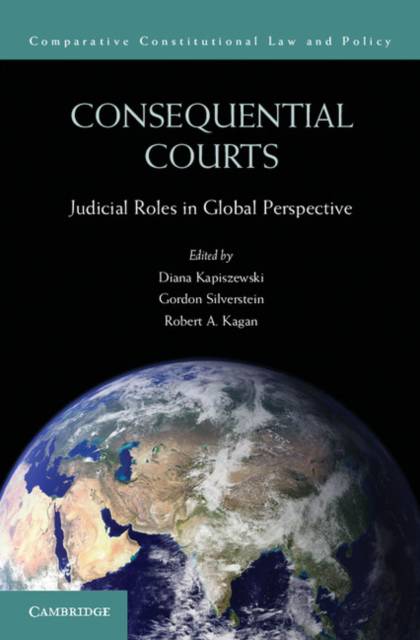
Consequential Courts
Judicial Roles in Global Perspective
€ 67,95
+ 135 punten
Omschrijving
In the early twenty-first century, courts have become versatile actors in the governance of many constitutional democracies, and judges play a variety of roles in politics and policy making. Assembling papers penned by an array of academic specialists on high courts around the world, and presented during a year-long Andrew W. Mellon Foundation John E. Sawyer Seminar at the University of California, Berkeley, this volume maps the roles in governance that courts are undertaking and the ways in which they have come to matter in the political life of their nations. It offers empirically rich accounts of dramatic judicial actions in the Americas, Europe, the Middle East, and Asia, exploring the political conditions and judicial strategies that have fostered those assertions of power, and evaluating when and how courts' performance of new roles has been politically consequential. By focusing on the content and consequences of judicial power, the book advances a new agenda for the comparative study of courts.
Specificaties
Betrokkenen
- Uitgeverij:
Inhoud
- Aantal bladzijden:
- 446
- Taal:
- Engels
- Reeks:
Eigenschappen
- Productcode (EAN):
- 9781107693746
- Verschijningsdatum:
- 8/04/2013
- Uitvoering:
- Paperback
- Formaat:
- Trade paperback (VS)
- Afmetingen:
- 152 mm x 229 mm
- Gewicht:
- 589 g


Alleen bij Standaard Boekhandel
+ 135 punten op je klantenkaart van Standaard Boekhandel
Cadeau

AANGERADEN


Beoordelingen
We publiceren alleen reviews die voldoen aan de voorwaarden voor reviews. Bekijk onze voorwaarden voor reviews.