


- Afhalen na 1 uur in een winkel met voorraad
- Gratis thuislevering in België vanaf € 30
- Ruim aanbod met 7 miljoen producten
- Afhalen na 1 uur in een winkel met voorraad
- Gratis thuislevering in België vanaf € 30
- Ruim aanbod met 7 miljoen producten





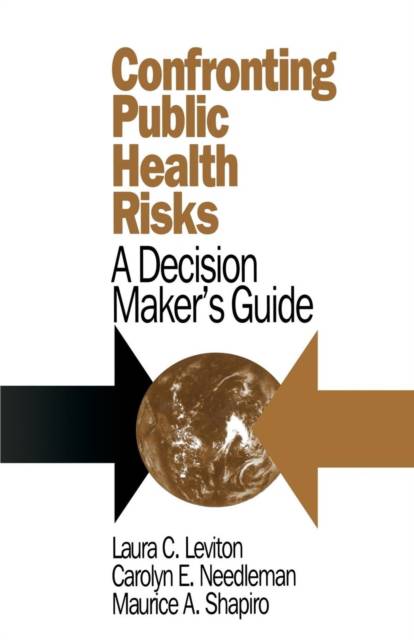
Confronting Public Health Risks
A Decision Maker′s Guide
Laura C Leviton, Carolyn E Needleman, Maurice Shapiro
€ 257,95
+ 515 punten
Uitvoering
Omschrijving
How might tensions between scientistsÆ research goals and the communityÆs service goals be reconciled? Who decides where the public interest lies? What kind of professional intervention best promotes social justice? Public health risks are often shared by a community but go unrecognized until some event precipitates change. Written to help public health and environmental protection professionals and students plan and cope with the social complexity of working with communities threatened by serious health hazards, Confronting Public Health Risks provides case examples and specific tools for analyzing and dealing with such predicaments. While many case studies of risk intervention deal only with a brief moment in the history of the problem, leaving the impression that the issue arose quickly and was resolved after the period studied, the six cases presented here (two from environmental health, two from occupational health, and two from the AIDS epidemic) all cover a long time span so that readers can track how events created the risk, the activities that brought attention to the risk, the conflicts and negotiations between the community members and professionals, and how the professionals helped the communities deal with the benefits and possible inadequacies of the outcome. Each case study is followed by a discussion of a key issue that the case illustrates particularly well. In addition, general questions are supplied with each case to draw attention to its lessons for other cases in the book so as to enhance readersÆ abilities to make informed choices about the process of confronting health risks more generally. This book provides "craft knowledge" for readers so that they can handle crises that call for public relations skills more confidentially, negotiate agreements among competing parties, and to work constructively with individuals, their families, and the mass media. A comprehensive, informative volume, Confronting Public Health Risks will benefit professionals and practitioners in the fields of public health, evaluation, public policy, public administration, nursing, organizational behavior, social work, social psychology, and AIDS.
Specificaties
Betrokkenen
- Auteur(s):
- Uitgeverij:
Inhoud
- Aantal bladzijden:
- 264
- Taal:
- Engels
- Reeks:
Eigenschappen
- Productcode (EAN):
- 9780803953574
- Verschijningsdatum:
- 5/12/1997
- Uitvoering:
- Paperback
- Formaat:
- Trade paperback (VS)
- Afmetingen:
- 140 mm x 216 mm
- Gewicht:
- 367 g


Alleen bij Standaard Boekhandel
+ 515 punten op je klantenkaart van Standaard Boekhandel
Cadeau

AANGERADEN


Beoordelingen
We publiceren alleen reviews die voldoen aan de voorwaarden voor reviews. Bekijk onze voorwaarden voor reviews.