


- Afhalen na 1 uur in een winkel met voorraad
- Gratis thuislevering in België vanaf € 30
- Ruim aanbod met 7 miljoen producten
- Afhalen na 1 uur in een winkel met voorraad
- Gratis thuislevering in België vanaf € 30
- Ruim aanbod met 7 miljoen producten





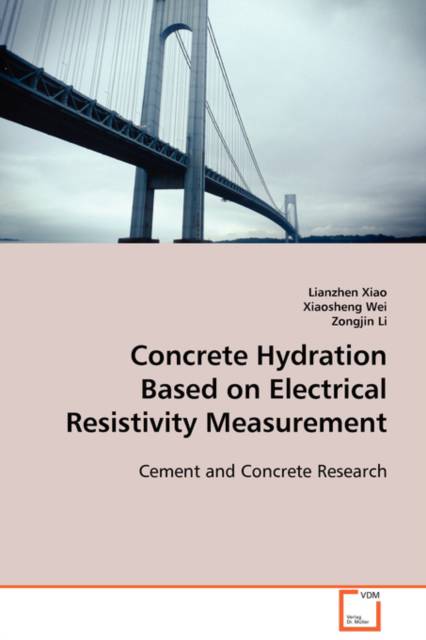
Concrete Hydration Based on Electrical Resistivity Measurement
Cement and Concrete Research
Lianzhen Xiao, Xiaosheng Wei, Zongjin Li
Paperback | Engels
€ 86,45
+ 172 punten
Omschrijving
The hydration process of concrete has been studied
using a non-contact electrical resistivity
measurement. Cement hydration stages have been
classified and the hydration mechanism has been
interpreted based on the analysis of resistivity
development curve and the investigations of
microstructure. The proposed concrete conduction
model shows that the degree of hydration dominates
concrete resistivity. It also proposes some
practical applications of the resistivity
measurement in the activity evaluation of mineral
admixtures, the selection of a superplasticizer and
the determination of concrete setting time. A
criterion has been proposed for selecting a suitable
superplasticizer. The more suitable superplasticizer
is the one which gives the mixture a higher Kr and a
higher Kt at the saturation dosage. The quantitative
relationship between the setting time of concrete
measured with the traditional penetration resistance
method and the time at which the electrical
resistivity critical points occurred has been
developed. The electrical resistivty measurement can
be used as an alternative method to determine the
setting times of concrete.
using a non-contact electrical resistivity
measurement. Cement hydration stages have been
classified and the hydration mechanism has been
interpreted based on the analysis of resistivity
development curve and the investigations of
microstructure. The proposed concrete conduction
model shows that the degree of hydration dominates
concrete resistivity. It also proposes some
practical applications of the resistivity
measurement in the activity evaluation of mineral
admixtures, the selection of a superplasticizer and
the determination of concrete setting time. A
criterion has been proposed for selecting a suitable
superplasticizer. The more suitable superplasticizer
is the one which gives the mixture a higher Kr and a
higher Kt at the saturation dosage. The quantitative
relationship between the setting time of concrete
measured with the traditional penetration resistance
method and the time at which the electrical
resistivity critical points occurred has been
developed. The electrical resistivty measurement can
be used as an alternative method to determine the
setting times of concrete.
Specificaties
Betrokkenen
- Auteur(s):
- Uitgeverij:
Inhoud
- Aantal bladzijden:
- 140
- Taal:
- Engels
Eigenschappen
- Productcode (EAN):
- 9783639090680
- Verschijningsdatum:
- 11/11/2008
- Uitvoering:
- Paperback
- Formaat:
- Trade paperback (VS)
- Afmetingen:
- 152 mm x 229 mm
- Gewicht:
- 195 g


Alleen bij Standaard Boekhandel
+ 172 punten op je klantenkaart van Standaard Boekhandel

Beoordelingen
We publiceren alleen reviews die voldoen aan de voorwaarden voor reviews. Bekijk onze voorwaarden voor reviews.