



Bedankt voor het vertrouwen het afgelopen jaar! Om jou te bedanken bieden we GRATIS verzending (in België) aan op alles gedurende de hele maand januari.
- Afhalen na 1 uur in een winkel met voorraad
- In januari gratis thuislevering in België
- Ruim aanbod met 7 miljoen producten
Bedankt voor het vertrouwen het afgelopen jaar! Om jou te bedanken bieden we GRATIS verzending (in België) aan op alles gedurende de hele maand januari.
- Afhalen na 1 uur in een winkel met voorraad
- In januari gratis thuislevering in België
- Ruim aanbod met 7 miljoen producten





Omschrijving
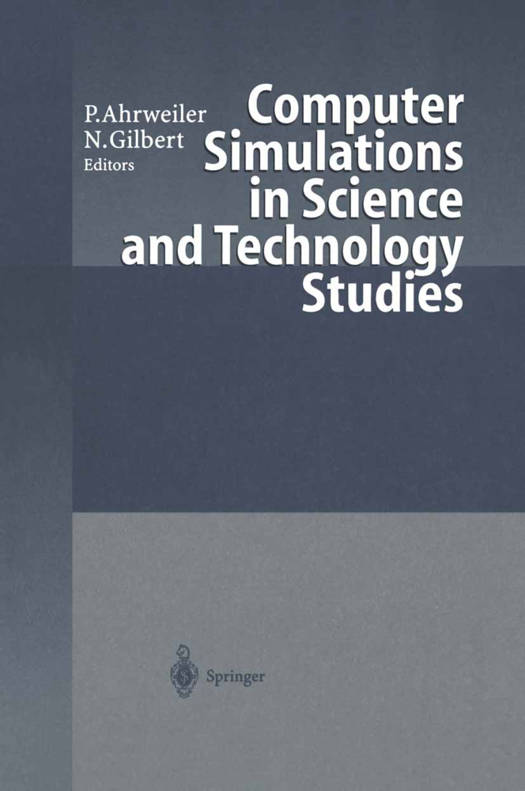
What is it about the structure and organisation of science and technology that has led to the spectacularly successful growth of knowledge during this century? This book explores this important and much debated question in an innovative way, by using computer simulations. The computer simulation of societies and social processes is a methodology which is rapidly becoming recognised for its potential in the social sciences. This book applies the tools of simulation systematically to a specific domain: science and technology studies. The book shows how computer simulation can be applied both to questions in the history and philosophy of science and to issues of concern to sociologists of science and technology. Chapters in the book demonstrate the use of simulation for clarifying the notion of creativity and for understanding the logical processes employed by eminent scientists to make their discoveries. The book begins with three introductory chapters. The first introduces simulation for the social sciences, surveying current work and explaining the advantages and pitfalls of this new methodology. The second and third chapters review recent work on theoretical aspects of social simulation, introducing fundamental concepts such as self- organisation and complexity and relating these to the simulation of scientific discovery.
Specificaties
Betrokkenen
- Uitgeverij:
Inhoud
- Aantal bladzijden:
- 245
- Taal:
- Engels
Eigenschappen
- Productcode (EAN):
- 9783642635212
- Verschijningsdatum:
- 23/10/2012
- Uitvoering:
- Paperback
- Formaat:
- Trade paperback (VS)
- Afmetingen:
- 156 mm x 234 mm
- Gewicht:
- 362 g

Alleen bij Standaard Boekhandel
+ 279 punten op je klantenkaart van Standaard Boekhandel
SOLDEN


Beoordelingen
We publiceren alleen reviews die voldoen aan de voorwaarden voor reviews. Bekijk onze voorwaarden voor reviews.