


- Afhalen na 1 uur in een winkel met voorraad
- Gratis thuislevering in België vanaf € 30
- Ruim aanbod met 7 miljoen producten
- Afhalen na 1 uur in een winkel met voorraad
- Gratis thuislevering in België vanaf € 30
- Ruim aanbod met 7 miljoen producten





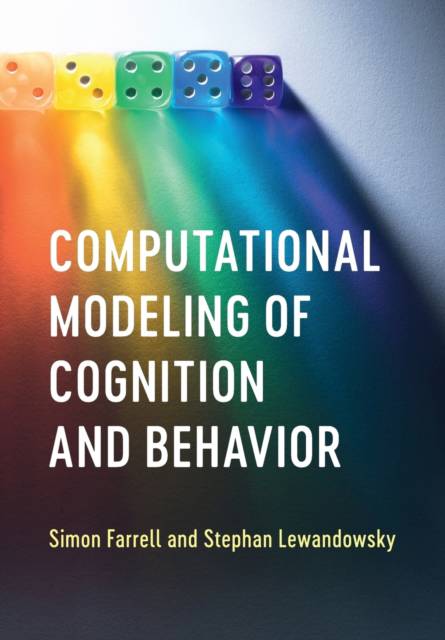
Computational Modeling of Cognition and Behavior
Simon Farrell, Stephan Lewandowsky
Paperback | Engels
€ 68,95
+ 137 punten
Uitvoering
Omschrijving
Computational modeling is now ubiquitous in psychology, and researchers who are not modelers may find it increasingly difficult to follow the theoretical developments in their field. This book presents an integrated framework for the development and application of models in psychology and related disciplines. Researchers and students are given the knowledge and tools to interpret models published in their area, as well as to develop, fit, and test their own models. Both the development of models and key features of any model are covered, as are the applications of models in a variety of domains across the behavioural sciences. A number of chapters are devoted to fitting models using maximum likelihood and Bayesian estimation, including fitting hierarchical and mixture models. Model comparison is described as a core philosophy of scientific inference, and the use of models to understand theories and advance scientific discourse is explained.
Specificaties
Betrokkenen
- Auteur(s):
- Uitgeverij:
Inhoud
- Aantal bladzijden:
- 482
- Taal:
- Engels
Eigenschappen
- Productcode (EAN):
- 9781107525610
- Verschijningsdatum:
- 22/02/2018
- Uitvoering:
- Paperback
- Formaat:
- Trade paperback (VS)
- Afmetingen:
- 175 mm x 248 mm
- Gewicht:
- 948 g


Alleen bij Standaard Boekhandel
+ 137 punten op je klantenkaart van Standaard Boekhandel
Cadeau

AANGERADEN


Beoordelingen
We publiceren alleen reviews die voldoen aan de voorwaarden voor reviews. Bekijk onze voorwaarden voor reviews.