


- Afhalen na 1 uur in een winkel met voorraad
- Gratis thuislevering in België vanaf € 30
- Ruim aanbod met 7 miljoen producten
- Afhalen na 1 uur in een winkel met voorraad
- Gratis thuislevering in België vanaf € 30
- Ruim aanbod met 7 miljoen producten





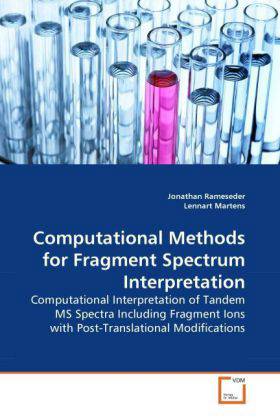
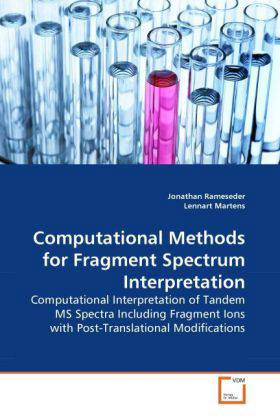
Computational Methods for Fragment Spectrum Interpretation
Computational Interpretation of Tandem MS Spectra Including Fragment Ions with Post-Translational Modifications
Jonathan Rameseder, Lennart Martens
Paperback | Engels
€ 48,45
+ 96 punten
Omschrijving
Post-translational modifications (PTMs) are of critical importance for a vast range of cellular processes such as growth control and signal transduction. Mass spectrometry (MS) can shed light on the characteristics of PTMs to gain insight into the mechanisms of numerous diseases including cancer. However, interpretation of tandem MS spectra including fragment ions with PTMs from high-throughput experiments is a complex challenge. The high number and diversity of known PTMs as well as suboptimal quality of spectra compromise the identification of PTMs in MS experiments. In this book, an efficient algorithm for the computational interpretation of tandem MS spectra including fragment ions with PTMs is described. Information on both precursor and fragment ion level is utilized and an arbitrary number of PTMs is considered. A robust statistical noise intensity model is developed to compensate for low spectrum quality. Finally, the algorithm is successfully applied on the fragment spectra in the PRIDE proteomics data repository to render it suitable for statistical machine learning investigations.
Specificaties
Betrokkenen
- Auteur(s):
- Uitgeverij:
Inhoud
- Aantal bladzijden:
- 56
- Taal:
- Engels
Eigenschappen
- Productcode (EAN):
- 9783639228588
- Verschijningsdatum:
- 11/01/2010
- Uitvoering:
- Paperback
- Formaat:
- Trade paperback (VS)
- Afmetingen:
- 152 mm x 229 mm
- Gewicht:
- 95 g


Alleen bij Standaard Boekhandel
+ 96 punten op je klantenkaart van Standaard Boekhandel
AANGERADEN


Beoordelingen
We publiceren alleen reviews die voldoen aan de voorwaarden voor reviews. Bekijk onze voorwaarden voor reviews.