


- Afhalen na 1 uur in een winkel met voorraad
- Gratis thuislevering in België vanaf € 30
- Ruim aanbod met 7 miljoen producten
- Afhalen na 1 uur in een winkel met voorraad
- Gratis thuislevering in België vanaf € 30
- Ruim aanbod met 7 miljoen producten





€ 59,14
+ 59 punten
Uitvoering
Omschrijving
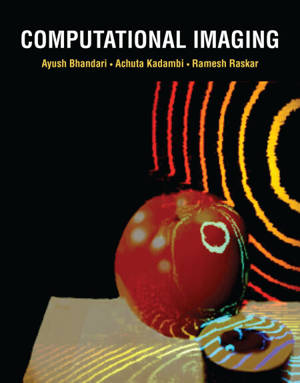
A comprehensive and up-to-date textbook and reference for computational imaging, which combines vision, graphics, signal processing, and optics.
Computational imaging involves the joint design of imaging hardware and computer algorithms to create novel imaging systems with unprecedented capabilities. In recent years such capabilities include cameras that operate at a trillion frames per second, microscopes that can see small viruses long thought to be optically irresolvable, and telescopes that capture images of black holes. This text offers a comprehensive and up-to-date introduction to this rapidly growing field, a convergence of vision, graphics, signal processing, and optics. It can be used as an instructional resource for computer imaging courses and as a reference for professionals. It covers the fundamentals of the field, current research and applications, and light transport techniques.
The text first presents an imaging toolkit, including optics, image sensors, and illumination, and a computational toolkit, introducing modeling, mathematical tools, model-based inversion, data-driven inversion techniques, and hybrid inversion techniques. It then examines different modalities of light, focusing on the plenoptic function, which describes degrees of freedom of a light ray. Finally, the text outlines light transport techniques, describing imaging systems that obtain micron-scale 3D shape or optimize for noise-free imaging, optical computing, and non-line-of-sight imaging. Throughout, it discusses the use of computational imaging methods in a range of application areas, including smart phone photography, autonomous driving, and medical imaging. End-of-chapter exercises help put the material in context.
Computational imaging involves the joint design of imaging hardware and computer algorithms to create novel imaging systems with unprecedented capabilities. In recent years such capabilities include cameras that operate at a trillion frames per second, microscopes that can see small viruses long thought to be optically irresolvable, and telescopes that capture images of black holes. This text offers a comprehensive and up-to-date introduction to this rapidly growing field, a convergence of vision, graphics, signal processing, and optics. It can be used as an instructional resource for computer imaging courses and as a reference for professionals. It covers the fundamentals of the field, current research and applications, and light transport techniques.
The text first presents an imaging toolkit, including optics, image sensors, and illumination, and a computational toolkit, introducing modeling, mathematical tools, model-based inversion, data-driven inversion techniques, and hybrid inversion techniques. It then examines different modalities of light, focusing on the plenoptic function, which describes degrees of freedom of a light ray. Finally, the text outlines light transport techniques, describing imaging systems that obtain micron-scale 3D shape or optimize for noise-free imaging, optical computing, and non-line-of-sight imaging. Throughout, it discusses the use of computational imaging methods in a range of application areas, including smart phone photography, autonomous driving, and medical imaging. End-of-chapter exercises help put the material in context.
Specificaties
Betrokkenen
- Auteur(s):
- Uitgeverij:
Inhoud
- Aantal bladzijden:
- 488
- Taal:
- Engels
Eigenschappen
- Productcode (EAN):
- 9780262368377
- Verschijningsdatum:
- 24/10/2022
- Uitvoering:
- E-book
- Beveiligd met:
- Adobe DRM
- Formaat:
- ePub


Alleen bij Standaard Boekhandel
+ 59 punten op je klantenkaart van Standaard Boekhandel
CADEAU


Beoordelingen
We publiceren alleen reviews die voldoen aan de voorwaarden voor reviews. Bekijk onze voorwaarden voor reviews.