


- Afhalen na 1 uur in een winkel met voorraad
- Gratis thuislevering in België vanaf € 30
- Ruim aanbod met 7 miljoen producten
- Afhalen na 1 uur in een winkel met voorraad
- Gratis thuislevering in België vanaf € 30
- Ruim aanbod met 7 miljoen producten





€ 187,45
+ 374 punten
Omschrijving
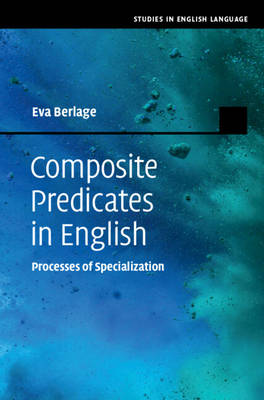
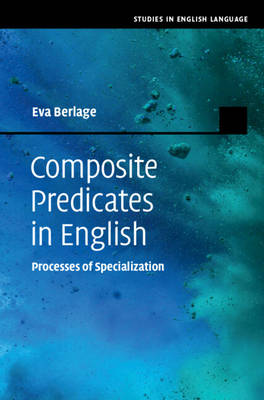
Composite Predicates (CPs) are of particular interest to linguists in that only some of them are semantically restricted in present-day English, while others are not. This book explores the semantic-syntactic evolution of twenty-four different CPs in English from the sixteenth to twentieth centuries, showing why some specialize over time while others do not. It highlights that the semantic scope and evolution of the morphologically and semantically related simple verb acts as a powerful predictor of whether or not a CP becomes semantically restricted in the course of time. In all those cases where CPs undergo specialization, semantic changes take place earlier than syntactic ones. Finally, large-scale corpus-analyses reveal that the CPs, which, in comparison to their morphologically simple verbs, can be considered analytic constructions, decrease from the nineteenth to twentieth century or show consistently low frequencies. This finding runs counter to the trend of English to become increasingly analytic.
Specificaties
Betrokkenen
- Auteur(s):
- Uitgeverij:
Inhoud
- Aantal bladzijden:
- 235
- Taal:
- Engels
- Reeks:
Eigenschappen
- Productcode (EAN):
- 9781107155640
- Verschijningsdatum:
- 15/05/2025
- Uitvoering:
- Hardcover
- Formaat:
- Genaaid
- Afmetingen:
- 152 mm x 229 mm
- Gewicht:
- 485 g


Alleen bij Standaard Boekhandel
+ 374 punten op je klantenkaart van Standaard Boekhandel
Cadeau

AANGERADEN


Beoordelingen
We publiceren alleen reviews die voldoen aan de voorwaarden voor reviews. Bekijk onze voorwaarden voor reviews.