


- Afhalen na 1 uur in een winkel met voorraad
- Gratis thuislevering in België vanaf € 30
- Ruim aanbod met 7 miljoen producten
- Afhalen na 1 uur in een winkel met voorraad
- Gratis thuislevering in België vanaf € 30
- Ruim aanbod met 7 miljoen producten





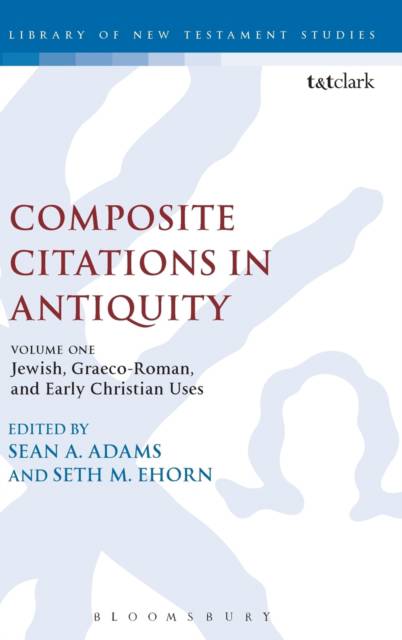
Composite Citations in Antiquity
Volume One: Jewish, Graeco-Roman, and Early Christian Uses
€ 322,45
+ 644 punten
Eenvoudig bestellen
Veilig betalen


Gratis thuislevering vanaf € 30 (via bpost)
Gratis levering in je Standaard Boekhandel
Omschrijving
Sean A. Adams and Seth M. Ehorn have drawn together an exciting range of contributors to evaluate the use of composite citations in Early Jewish, Greco-Roman, and Early Christian authors (up through Justin Martyr). The goal is to identify and describe the existence of this phenomenon in both Greco-Roman and Jewish literature. The introductory essay will help to provide some definitional parameters, although the study as a whole will seek to weigh in on this question. The contributors seek to address specific issues, such as whether the quoting author created the composite text or found it already constructed as such. The essays also cover an exploration of the rhetorical and/or literary impact of the quotation in its present textual location, and the question of whether the intended audiences would have recognised and 'reverse engineered' the composite citation and as a result engage with the original context of each of the component parts.
In addition to the specific studies, Professor Christopher Stanley provides a summary reflection on all of the essays in the volume along with some implications for New Testament studies.Specificaties
Betrokkenen
- Uitgeverij:
Inhoud
- Aantal bladzijden:
- 256
- Taal:
- Engels
- Reeks:
- Reeksnummer:
- nr. 525
Eigenschappen
- Productcode (EAN):
- 9780567657978
- Verschijningsdatum:
- 19/11/2015
- Uitvoering:
- Hardcover
- Formaat:
- Genaaid
- Afmetingen:
- 152 mm x 236 mm
- Gewicht:
- 521 g

Alleen bij Standaard Boekhandel
+ 644 punten op je klantenkaart van Standaard Boekhandel
CADEAU

AANGERADEN


Beoordelingen
We publiceren alleen reviews die voldoen aan de voorwaarden voor reviews. Bekijk onze voorwaarden voor reviews.