


- Afhalen na 1 uur in een winkel met voorraad
- Gratis thuislevering in België vanaf € 30
- Ruim aanbod met 7 miljoen producten
- Afhalen na 1 uur in een winkel met voorraad
- Gratis thuislevering in België vanaf € 30
- Ruim aanbod met 7 miljoen producten





€ 115,45
+ 230 punten
Eenvoudig bestellen
Veilig betalen


Gratis thuislevering vanaf € 30 (via bpost)
Gratis levering in je Standaard Boekhandel
Omschrijving
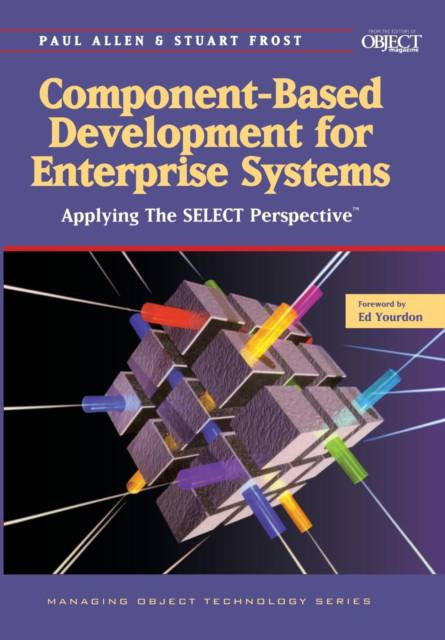
This ground-breaking book distills the experience of the authors in dealing with problems in industry that can be solved by using the SELECT Perspective. A pragmatic, component-based approach for the development of enterprise systems, the SELECT Perspective comprises a unique blend of techniques, architecture, and process. Enterprise software development presents challenges of sheer scale and complexity that continue to accelerate at a terrific pace. Businesses are becoming increasingly adaptive and are calling for software that is more and more flexible. Component technology holds the promise of solving these problems, but there are some complications. For example, many organizations continue to struggle with the challenge of integrating their legacy systems with the newer technology. The approach in this book offers a streamlined set of modeling techniques based on Unified Modeling Language (UML); uses a serviced-based architecture that provides an overall design philosophy for reusable software that addresses the needs of the business, not the technology; and is a clearly defined software process that provides guidance on how to employ the knowledge base of available techniques.
Specificaties
Betrokkenen
- Auteur(s):
- Uitgeverij:
Inhoud
- Aantal bladzijden:
- 490
- Taal:
- Engels
- Reeks:
- Reeksnummer:
- nr. 13
Eigenschappen
- Productcode (EAN):
- 9780521649995
- Verschijningsdatum:
- 13/01/1998
- Uitvoering:
- Paperback
- Formaat:
- Trade paperback (VS)
- Afmetingen:
- 180 mm x 235 mm
- Gewicht:
- 771 g


Alleen bij Standaard Boekhandel
+ 230 punten op je klantenkaart van Standaard Boekhandel
CADEAU

AANGERADEN


Beoordelingen
We publiceren alleen reviews die voldoen aan de voorwaarden voor reviews. Bekijk onze voorwaarden voor reviews.