


- Afhalen na 1 uur in een winkel met voorraad
- Gratis thuislevering in België vanaf € 30
- Ruim aanbod met 7 miljoen producten
- Afhalen na 1 uur in een winkel met voorraad
- Gratis thuislevering in België vanaf € 30
- Ruim aanbod met 7 miljoen producten





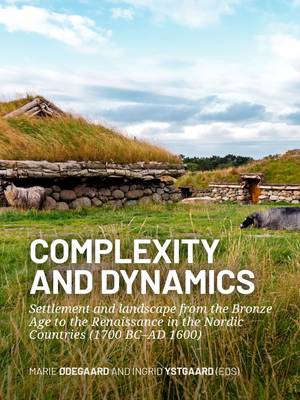
Complexity and Dynamics
Settlement and Landscape from the Bronze Age to the Renaissance in the Nordic Countries (1700 BC-AD 1600)
Degaard Marie
Paperback | Engels
€ 40,00
+ 80 punten
Omschrijving
How did people organize their settlements in later prehistoric societies? How do architecture, spatial organization, land divisions, and landscape use relate to different modes of social organization? The papers in this book contribute to a greater understanding of the complexity and dynamics of settlement and landscape organization in the Nordic countries from the Late Bronze Age to the Renaissance.
Among the topics addressed is the notion of the wandering settlements as the standard settlement pattern across southern Scandinavia in the last millennium BC. This idea is nuanced by in-depth regional studies. Up-to-date methodological and theoretical insights are employed to shed light on overarching patterns of demography and the interaction between humans and the natural world, as well as on technological adaptation and innovation. Contributions to the book explore the nature of the relationships between settlements: both symmetrical relationships, between neighboring farmsteads, and asymmetrical relationships, between farmsteads representing different levels in a social hierarchy. Spatial and temporal relations between communities of the living and the dead are also discussed.
This book provides a comprehensive update on current research and methodologies in settlement archaeology in the Nordic countries. It is intended for students, archaeologists, and the interested reader working with settlements, landscape use, and social organization.
Among the topics addressed is the notion of the wandering settlements as the standard settlement pattern across southern Scandinavia in the last millennium BC. This idea is nuanced by in-depth regional studies. Up-to-date methodological and theoretical insights are employed to shed light on overarching patterns of demography and the interaction between humans and the natural world, as well as on technological adaptation and innovation. Contributions to the book explore the nature of the relationships between settlements: both symmetrical relationships, between neighboring farmsteads, and asymmetrical relationships, between farmsteads representing different levels in a social hierarchy. Spatial and temporal relations between communities of the living and the dead are also discussed.
This book provides a comprehensive update on current research and methodologies in settlement archaeology in the Nordic countries. It is intended for students, archaeologists, and the interested reader working with settlements, landscape use, and social organization.
Specificaties
Betrokkenen
- Auteur(s):
- Uitgeverij:
Inhoud
- Aantal bladzijden:
- 210
- Taal:
- Engels
Eigenschappen
- Productcode (EAN):
- 9789464270426
- Verschijningsdatum:
- 28/03/2023
- Uitvoering:
- Paperback
- Formaat:
- Trade paperback (VS)
- Afmetingen:
- 210 mm x 279 mm


Alleen bij Standaard Boekhandel
+ 80 punten op je klantenkaart van Standaard Boekhandel
Cadeau

AANGERADEN


Beoordelingen
We publiceren alleen reviews die voldoen aan de voorwaarden voor reviews. Bekijk onze voorwaarden voor reviews.