


- Afhalen na 1 uur in een winkel met voorraad
- Gratis thuislevering in België vanaf € 30
- Ruim aanbod met 7 miljoen producten
- Afhalen na 1 uur in een winkel met voorraad
- Gratis thuislevering in België vanaf € 30
- Ruim aanbod met 7 miljoen producten





€ 52,95
+ 105 punten
Eenvoudig bestellen
Veilig betalen


Gratis thuislevering vanaf € 30 (via bpost)
Gratis levering in je Standaard Boekhandel
Omschrijving
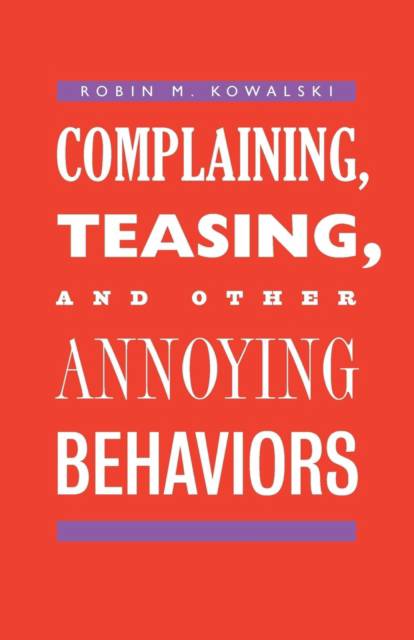
Everyone has teased, nagged, betrayed, or lied to another person. Likewise, everyone has been the unfortunate object of such unpleasant behaviors. In this intriguing book, social psychologist Robin M. Kowalski examines the intricacies of six annoying interpersonal behaviors: complaining, teasing, breaches of propriety, worry and reassurance-seeking, lying, and betrayal. She considers the functions of these behaviors, the types of people who are inclined to do them, the consequences for victims and perpetrators, and the ways in which such behaviors might be curtailed. Complaining, Teasing, and Other Annoying Behaviors provides for the first time a multifaceted picture of common annoying behaviors. The book answers these questions and many others: - Why do people tease? - What are the consequences of annoying behaviors for the people involved? - Is there a positive side to irritating behaviors? - Are people more likely to lie to those close to them or to strangers? - Do excuses and apologies diminish the hurtful effect of unpleasant behaviors? - What is the relation of gender and culture to specific annoying acts?
Specificaties
Betrokkenen
- Auteur(s):
- Uitgeverij:
Inhoud
- Aantal bladzijden:
- 208
- Taal:
- Engels
Eigenschappen
- Productcode (EAN):
- 9780300209747
- Verschijningsdatum:
- 30/04/2014
- Uitvoering:
- Paperback
- Formaat:
- Trade paperback (VS)
- Afmetingen:
- 140 mm x 216 mm
- Gewicht:
- 267 g


Alleen bij Standaard Boekhandel
+ 105 punten op je klantenkaart van Standaard Boekhandel
CADEAU

AANGERADEN


Beoordelingen
We publiceren alleen reviews die voldoen aan de voorwaarden voor reviews. Bekijk onze voorwaarden voor reviews.